Alstom has partnered with Flox Intelligence to conduct a series of extensive field tests utilising AI technology that will identify and deter wildlife along rail tracks in Sweden.
Preliminary testing has shown that the system has strong potential to reduce the risk of collisions with wild animals – one of the most common causes of disruptions on the country’s network.
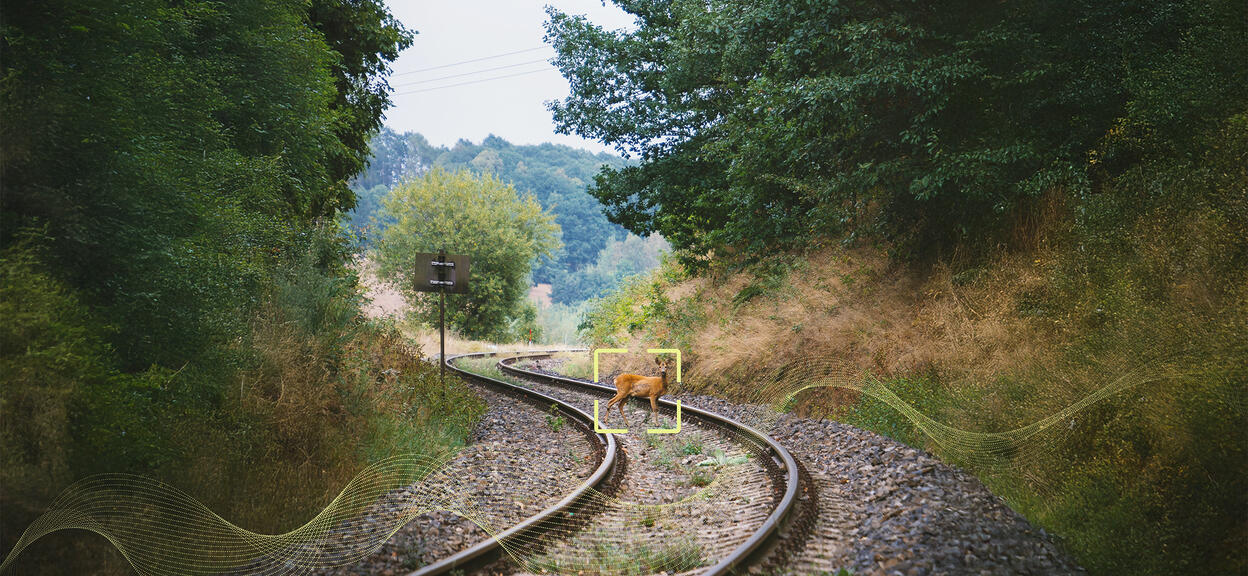
Detection of roe deer on the railway track using the AI detection system
© Flox Intelligence 2026
Based on AI-powered cameras that identify animals in real time before activating tailored audio signals to scare them off, initial test phases of the technology have seen it identify several species along the tracks, including moose, roe deer, fox, and wild boar.
Sara Nozkova, CEO of Flox Intelligence, said:
Our field tests show that AI has the potential to identify animals with high precision.
By combining our expertise in wildlife deterrence with Alstom’s leadership in railway innovation, we create a solution that both protects animals and increases operational reliability.
A second phase of implementation began in April, and was expanded to include the full system with both video detection and sound deterrence.
All tests thus far have been carried out in collaboration with the egional train authority Tåg i Bergslagen and its operator VR on several railway lines in Sweden, such as Dalabanan, Bergslagsbanan, Godsstråket through Bergslagen and Bergslagenpendeln. Alstom currently holds a partnership agreement with Tåg i Bergslagen for the purpose of developing innovative technology – and testing this AI system is part of that collaboration.
The project has been funded with support from Vinnova, Sweden’s innovation agency, and is seen as an important step in both Sweden’s and the European Union’s work to achieve safe and sustainable transport systems.
When operational; each detection of an animal is categorised in a process that allows the AI to continuously improve its own capabilities. During tests, the system has thus far shown to be particularly accurate for farm animals, as well as birds such as crows and pigeons, whilst the identification of moose and roe deer required more training to achieve the same level of accuracy.
Maria Signal Martebo, Managing Director Alstom Sweden, said:
Having been given the opportunity to evaluate the system is a big step forward for both safety and sustainability in Swedish rail traffic.
We were pleasantly surprised at how many animals we could observe from just a single train, on sections that had many collisions. By reducing train-wildlife collisions, we will protect passengers and wildlife while also addressing operational and societal costs associated with these incidents.
With around 5,000 animal collisions reported per year in Sweden; Alstom has stated that the project aims to increase punctuality, reduce impacts on nature and provide a better working environment whilst eliminating the suffering of animals.