In rail, efficiency is often framed around propulsion, network optimisation and lightweighting. Regardless of whether a train is diesel, electric, or hybrid, less mass means that less energy is required to move it.
Reducing vehicle weight is considered one of the most effective ways to lower traction energy consumption, benefiting operators as they face growing pressure to reduce both costs and emissions. This principle has been central to the design of modern rolling stock such as the Siemens Velaro high-speed train family, where lightweight construction contributes to lower energy use at high speeds.
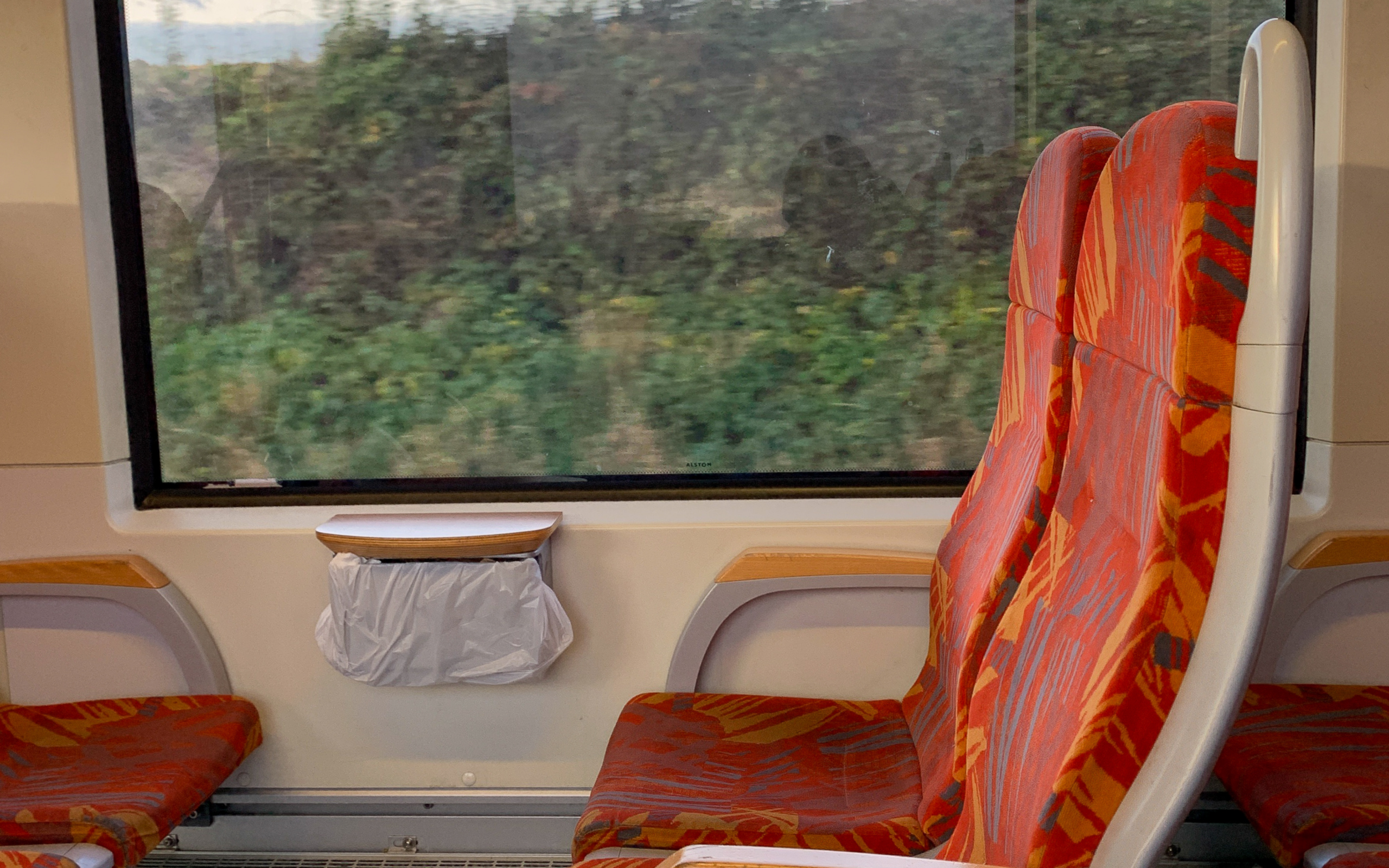
A traditional train interior
© Canva
While structural components and traction systems account for the majority of the overall mass of a train, interior elements, such as seating, tables, and fittings, also offer a significant cumulative opportunity. A single carriage can contain hundreds of seats, so when multiplied across a full trainset, even modest reductions per unit quickly add up.
The benefits also extend beyond energy consumption. Lighter trains place less stress on tracks and infrastructure, which can help reduce maintenance requirements over time. They can also improve acceleration and braking performance, supporting more efficient and reliable operations across the network.
Consequently, seating has become a growing focus in the industry, and projects such as the Shift2Rail European rail research initiative have actively explored the use of lighter materials in interior components to improve energy efficiency and lifecycle performance. A key innovation stream within this project was the Mat4Rail research, which focused on developing next-generation materials for railway applications. It brought together industry and research partners to explore advanced solutions such as lightweight composites, improved coatings and fire-resistant materials, all aimed at reducing vehicle weight while maintaining strict safety and durability standards.
Traditionally, rail seats have been designed with durability as the primary concern, often resulting in heavier designs, but today, advances in materials such as high-strength composites and lightweight alloys have changed that equation. As such, manufacturers such as Kiel are able to reduce weight without compromising comfort, safety, or longevity. For example, Kiel’s CULTA seat features a fully magnesium frame that has been crash tested according to Unife. This composition has helped it gain recognition as the lightest train seat in the world in its class.
In this context, lightweight seating is part of a broader shift towards smarter, more efficient rail vehicles, where every kilogram saved contributes to a more sustainable and resilient network.