How RFID Enables Reliable Train Positioning in Modern Metro Networks
At the heart of a major Southeast Asia metro network’s operational efficiency and innovation is a sophisticated train positioning approach enabled by TransCore’s RFID technology.
In densely populated urban environments, rail network uptime is more than a performance metric—it is critical to maintaining dependable service across a high-capacity mobility system relied on every day by thousands of people.
Delivering frequent, dependable rail service across complex urban systems requires precise, continuous visibility into train locations throughout the metro network.
Greg Blocker, Senior Vice President of International Business Development at TransCore, a global leader in transportation solutions, said:
Accurate, real-time train position data is foundational to efficient rail operations.
Enabling higher-performance train control
Achieving strong operational performance requires more than conventional signalling. Modern automatic train control systems help operators manage train movement more precisely, support more consistent operations, and improve network throughput by enabling reduced headways.
Blocker says:
This allows for better utilisation of system assets, including train cars, which helps lower operational costs and supports smoother system performance.
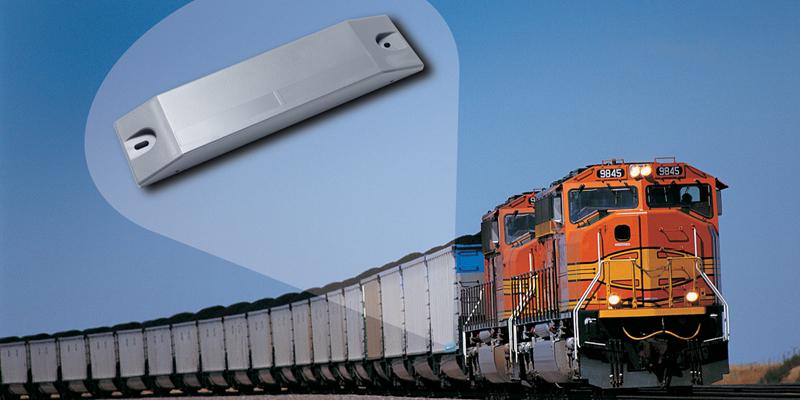
Accurate, real-time train positioning is a key input to these systems. In the Southeast Asian deployment, TransCore’s fixed-point RFID technology was used to provide precise location data throughout a fully underground metro line. Working with the signalling provider, TransCore mounted RFID readers and antennas beneath the trains—one at each end of the train set—while tags or transponders were installed on track sleepers at designated intervals along the alignment.
The RFID reader interfaces with the train’s onboard control system. As the train passes over a tag, the reader decodes the information and transmits it for processing. This provides the train position data needed to support reliable operation across the multi-station metro line.
Built for lifecycle support
The initial phase of this metro line opened more than a decade ago using earlier-generation TransCore RFID technology originally developed for a major European rail application. That hardware was successfully adapted to meet local requirements and has demonstrated consistent long-term performance in service.
More recently, TransCore was selected to support the train control system for another new line on the same metro network—marking a transition to next-generation RFID technology designed for long-term supportability.
To meet that requirement, TransCore migrated to newer, more supportable RFID technology while maintaining backward compatibility with the legacy platform, a key consideration for integration with existing onboard equipment.
Blocker, said:
We engineered the new RFID front end to work with legacy systems so we could support the line over its full lifecycle. That was the key driver: long-term support and seamless compatibility.
Maintaining product supportability is a central part of TransCore’s service approach. Obsolescence management is a routine part of TransCore’s operations, helping to ensure systems remain supportable and relevant over time.
The project is now entering the final phases of system testing. “Testing is a rigorous process,” Blocker says. “It takes time to fully validate a train and its onboard systems, but we’re progressing through the final stages now.”
Proven performance matters
Having pioneered RFID applications in the transportation industry, TransCore is a leading supplier of RFID systems for automatic equipment identification, asset tracking, and train positioning applications around the world. Its technology is widely used by major system
integrators, reflecting the company’s experience, proven performance, and deep familiarity with specialized rail requirements.
Consistency is also a major consideration. Once an integrator has invested significant time validating a particular technology, introducing an unproven alternative can require substantial rework, additional testing, and added project risk.
Blocker says:
Operators may be tempted by lower-cost alternatives. But operational reliability, long-term support, and proven performance are what matter most.
To learn more about TransCore’s real-time train positioning solutions, visit transcore.com/rfid/rail-intermodal or contact the team at
This article was originally written by TransCore.