Developed in close collaboration with Network Rail, Ninehundred’s Incident Watch Camera enables remote monitoring of trackside defects, reducing the need for site visits while improving safety and operational efficiency.
Ninehundred Communications has secured product approval from Network Rail for its Incident Watch Camera, which is now ratified for operational use across the UK rail network.
By enabling real-time visibility of trackside incidents and continuous monitoring of critical assets for defects and faults remotely, the camera improves both safety and operational efficiency.
This approval coincides with the introduction of the new Network Rail standard NR/L2/TRK/1055 Section 11.2.2 – Remote Watchperson for monitoring cracked crossings, developed by the organisation’s technical authority.
Frequent monitoring of crack propagation is a necessity, and traditionally this has required a watchperson on site. However, the new standard allows monitoring to be carried out using video or live-streaming equipment – provided a Network Rail-approved camera is used. At present, Ninehundred’s Incident Watch Camera is the only system approved for this purpose, with its product acceptance in design (PAD) PA05/08050 issued alongside the new standard to ensure it could be implemented immediately.
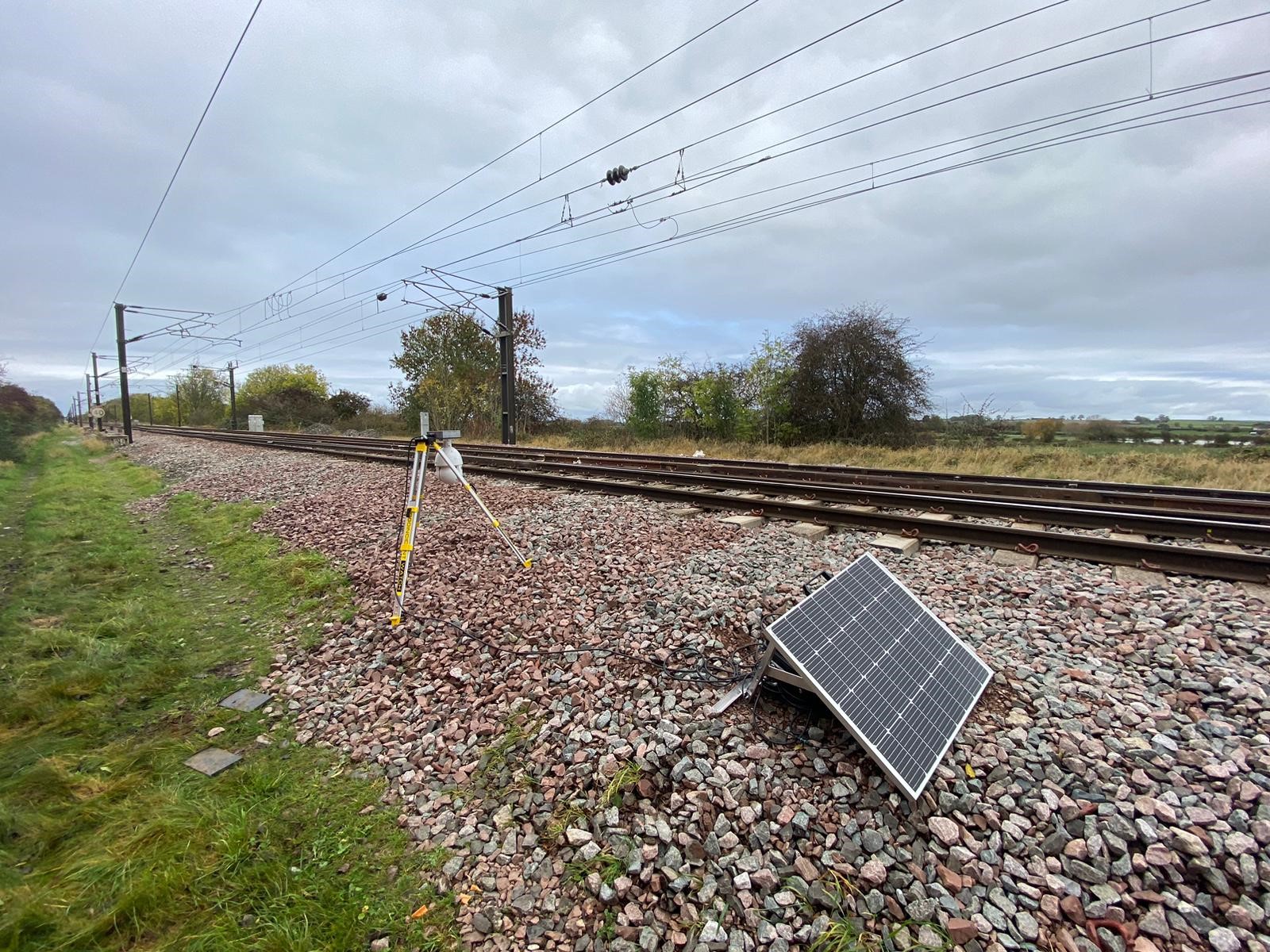
Incident Watch
© Ninehundred Communications Group
Keeping Boots off Ballast
Ninehundred’s Incident Watch Camera was specifically designed for situations where a watchperson would normally be required. The compact, lightweight yet rugged system uses a 4G PTZ camera, with up to 350 hours of battery life, and has a solar panel for charging, making it self-maintaining.
It can be rapidly taken to a site by a first responder, where it’s quickly deployed and the video live-streamed to a computer, tablet or mobile phone. This allows incidents to be assessed remotely, ensuring the appropriate action can be taken without delay.
Ben Ryan, Account Manager at Ninehundred Communications, said:
It’s about keeping boots off ballast. From a safety perspective, the system removes the need to send out personnel to do inspections, allowing monitoring to be set up within minutes and carried out remotely from a safe, controlled environment.
Mark Boddy, Account Manager at Ninehundred Communications, added:
From a cost perspective, it’s far more efficient. Sending a person to site requires line blocks and operational disruption, which is expensive. With the camera, inspections can be carried out remotely, at higher line speeds and without line blocks, delivering significant cost savings.
From Operational Challenge to Approved Solution
The Network Rail approval follows extensive development, rigorous field testing and close collaboration between Ninehundred Communications and the infrastructure manager to ensure the camera meets the highest standards.
Its development began in early 2022, when Network Rail’s Western Route was grappling with increasing delays caused by cracked crossings. Seeking a way to monitor defects more effectively without repeatedly sending staff to site, Network Rail Programme Manager Dan Vines approached Ninehundred with a request to develop a remotely deployable trackside camera solution.
An initial prototype was developed and successfully captured the required imagery, but the way the footage was viewed proved impractical for operational use. At the same time, Vines was already using another Ninehundred product – a solar-powered PTZ camera – and suggested combining elements of the two systems.
Ben Ryan explained:
The picture quality and viewing formats were far better and much more user-friendly.
Working from this feedback, Ninehundred redesigned the system, producing a second version within three months.
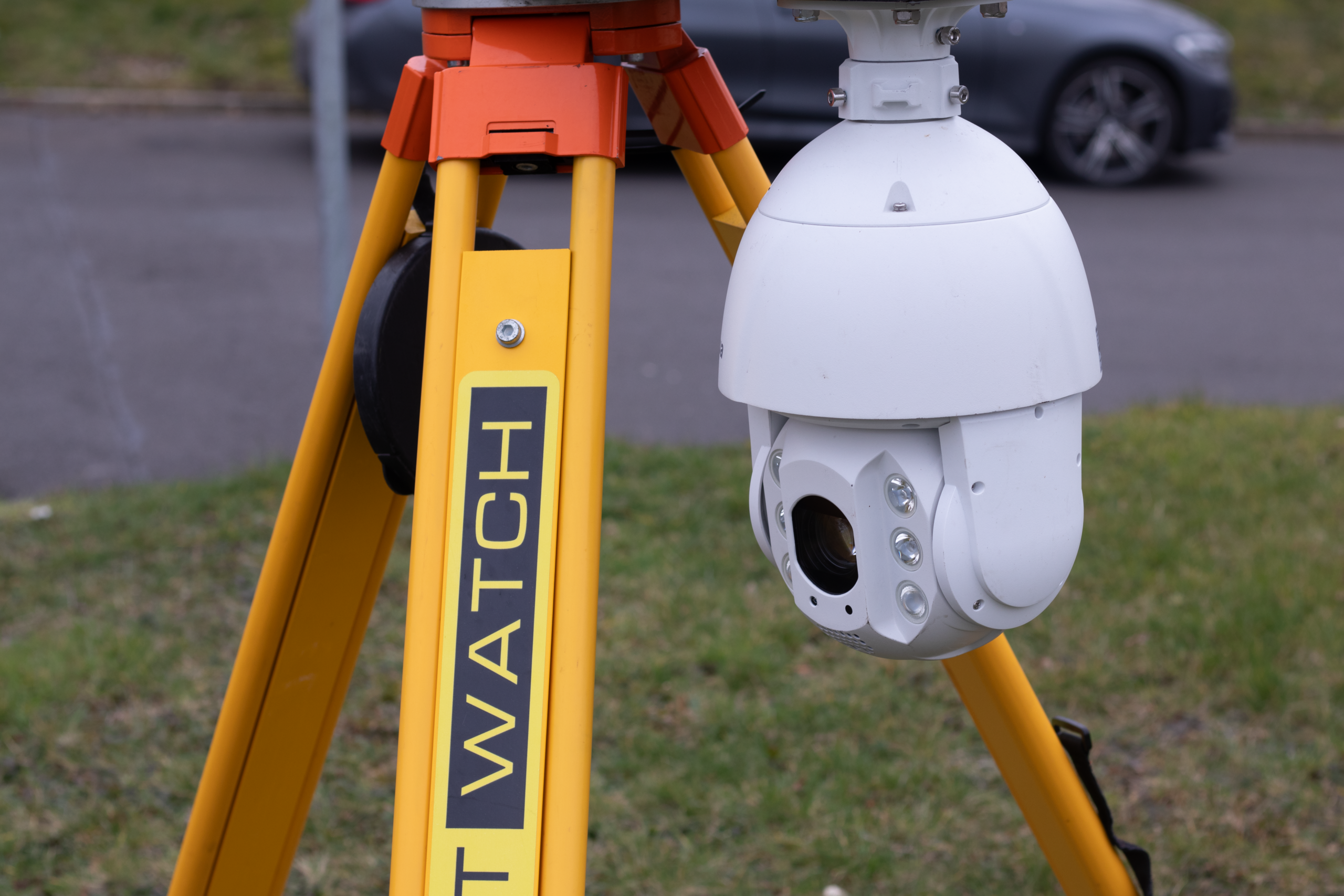
Incident Watch camera
© Ninehundred Communications Group
Refining the Solution
Real-world feedback informed final refinements to the product, improving the camera’s performance, durability and useability, and ensuring it fully meets the demands of front-line rail operations.
Mark Boddy noted:
As the design matured, further operational requirements were added. The system needed to operate for at least seven days on battery power, with the option of solar charging to allow long-term deployment. In response the battery life was extended to up to two weeks, while solar-powered units have now been left in place during trials for more than a year without battery replacement.
Following widespread operational trials, Vines put forward the system for formal product acceptance in October 2024. After extended trials by the Technical Authority S&C Engineering team at three high-criticality locations, full certification was granted last December, marking the transition from a user-led innovation to an approved, standard-compliant system now ready for wider deployment.
Why Ninehundred?
For organisations looking to improve safety, reduce disruption and deploy proven technology at pace, Ninehundred offers a partner with both depth and delivery capability. With more than 40 years of experience in the rail sector, the company combines a broad portfolio spanning communications, remote monitoring, cameras, lighting, CCTV towers and rail-approved safety equipment, with the ability to design bespoke solutions around real operational challenges.
Crucially, many of Ninehundred’s products are born directly from a customer need. Backed by an in-house R&D team, the company works collaboratively with engineers and operators to turn ideas into practical, deployable solutions.
The Incident Watch Camera is a clear example of this model in action: a user-led innovation that has evolved into a Network Rail-approved solution delivering measurable safety, operational and cost benefits.
To find out more about the Incident Watch Camera, or Ninehundred’s wider rail solutions, visit their website, call 0845 600 4 900, or email [email protected].