From this Sunday, London Northwestern Railway and West Midlands Railway will join the growing list of operators owned by the public.
The milestone will see two sides of the West Midlands Trains (WMT) business come under public ownership, marking the fourth operator to enter public ownership under the government’s Passenger Railway Services (Public Ownership) Act as part of the formation of Great British Railways (GBR).
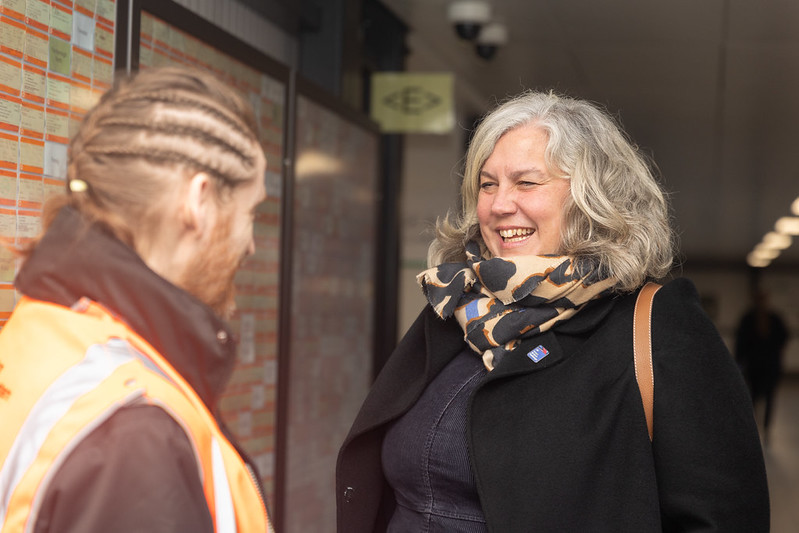
More than 8,500 publicly owned rail services are now running daily
© Department for Transport
London Northwestern Railway operates services between Liverpool and Birmingham and along the West Coast Main Line to and from London Euston, and West Midlands Railway, serves destinations across the West Midlands via Birmingham New Street and Birmingham Snow Hill.
The move also coincides with the government’s decision to freeze rail fares for the first time in 30 years.
Transport Secretary, Heidi Alexander, said:
From this Sunday, the thousands of passengers who travel with London Northwestern and West Midlands Railway will be using services that are owned by the public and run with their interests at heart.
We’re working hard to reform a fragmented system and deliver a reliable railway that regenerates communities, rebuilds the trust of its passengers, and delivers the high standards they rightly expect.
Thus far, West Midlands Trains, Greater Anglia, c2c, Northern, TransPennine Express, Southeastern, LNER and South Western Railway have come under DfT Operator Limited (DFTO) management.
Since becoming publicly owned, South Western Railway has quadrupled its number of new trains in service, whilst Northern has announced plans to introduce new, state-of-the-art simulators to accelerate driver training programmes, as well as intentions to purchase up to 450 new trains.
Ian McConnell, managing director of West Midlands Trains, said:
We are proud to be one of the fastest-growing train operators in the country with millions of passengers travelling on London Northwestern Railway (LNR) and West Midlands Railway (WMR) services every month.
We’ve introduced more than 100 new trains as well as upgrading our depots and station facilities. We’re looking forward to opening five brand new stations later this year and we’re also rolling out ‘Pay-As-You-Go’ ticketing across 75 locations to enable seamless tap-in, tap-out travel for our customers.
Public ownership is an exciting opportunity to build on this success through a strong culture of collaboration and integration with the wider family of publicly owned operators.
Together, we can drive performance by sharing best practice and accelerating innovation and continue to deliver even better journeys for our passengers across the LNR and WMR networks.
We are now a step further on the journey to Great British Railways – a railway that we can be proud of and one that benefits the passengers and communities we serve.
On 31 May, Govia Thameslink Railway’s (GTR) services will be next to transfer to public ownership, with Chiltern Railways and Great Western Railways services then expected to follow, with the Secretary of State for Transport due to make final decisions on when exactly this will happen in due course.
The Department for Transport (DfT) has stated that it expects the full public ownership programme to be completed by the end of 2027.