Great Western Railway (GWR) will introduce the UK’s first battery-only powered train into passenger service on Saturday 31 January.
The Class 230 train will begin operating on the Greenford branch line, replacing a diesel unit. Its first scheduled passenger service will be the 05:30 departure from West Ealing to Greenford. Initially, the train will run on Saturdays, with the potential for additional services to be added later in the year as performance data is gathered.
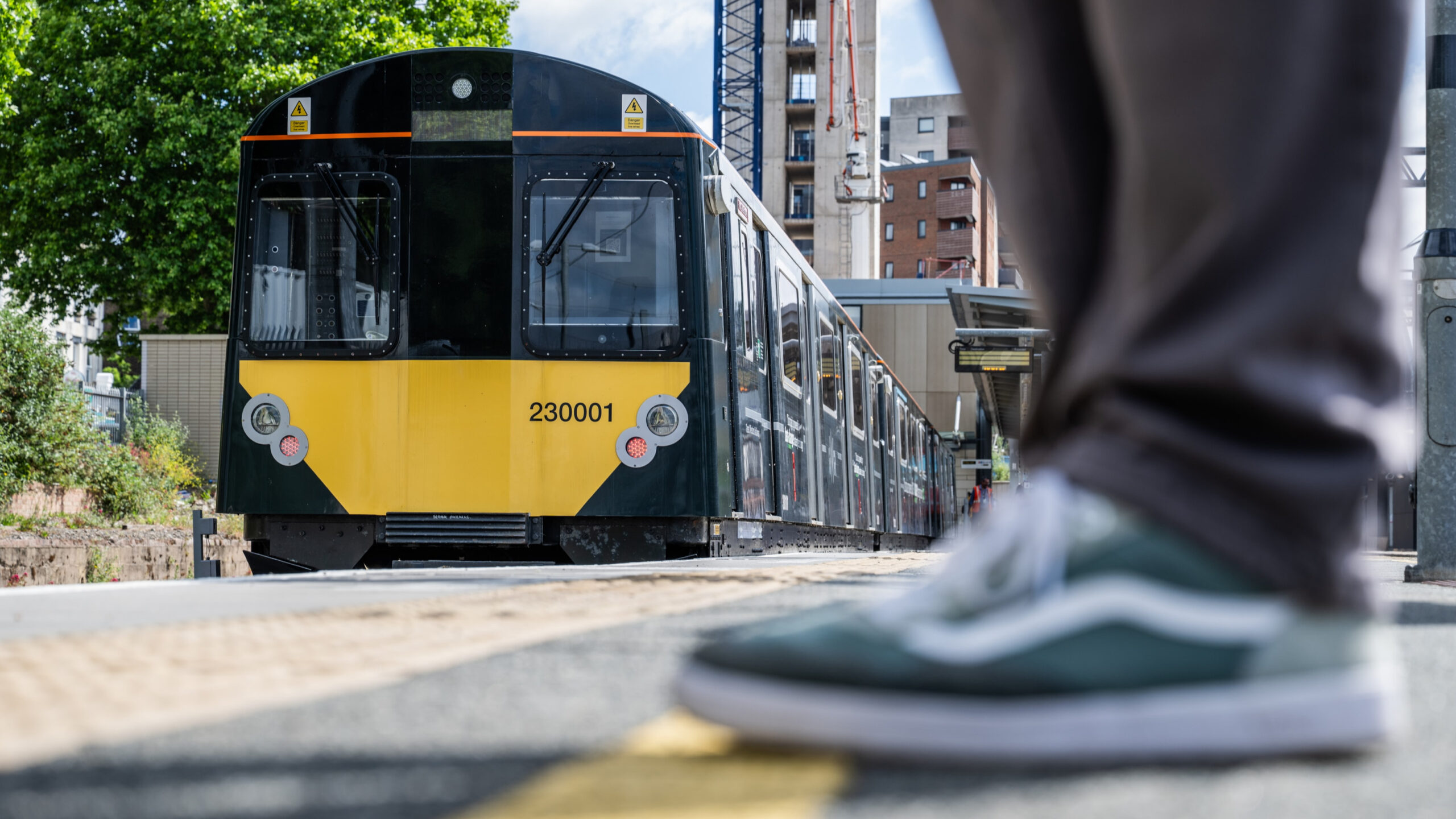
Great Western Railway to introduce record-breaking battery train into passenger service
© Great Western Railway
The introduction follows a 22-month trial of fast-charge battery technology on the same route. During this period, the train has undergone technical testing and safety assessments to evaluate how battery-electric operation performs in a passenger railway environment, particularly on routes without overhead electrification.
The train also set a new world record for the longest distance travelled by a battery-electric train on a single charge, covering 200.5 miles. This surpassed the previous record of 139 miles, set in 2021. This confirmed that battery technology could support longer-distance rail services than previously demonstrated.
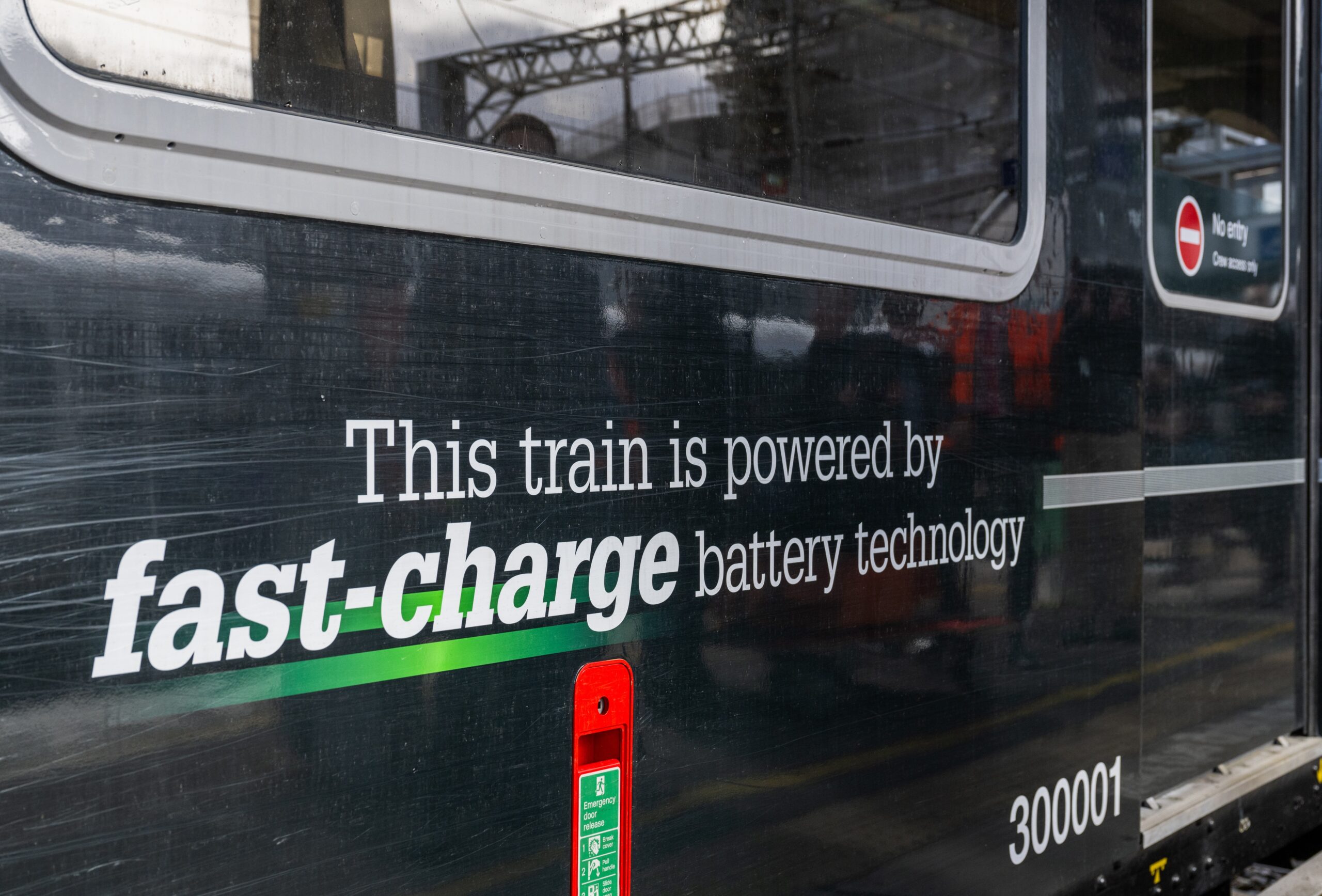
GWR’s battery-only train
© Great Western Railway
GWR Engineering Director, Dr Simon Green, said:
This is a significant moment for all those involved in this innovative project and comes at a crucial time as we focus on plans to replace our ageing diesel fleet.
Our fast-charge trial has successfully demonstrated that battery technology offers a reliable and efficient alternative to power electric trains, in cases where overhead lines aren’t possible or desirable.
Delivering the train into passenger service will enable us to gain further insight which can be fed into our own decarbonisation plans, as well as those of the wider rail industry.
I’d like to congratulate colleagues at Great Western Railway and Network Rail who have worked so hard to make the trial a success and make this next step possible, and also pay tribute to the late Adrian Shooter, whose vision this was.
Network Rail has supported the project through its Western route, including the installation of fast-charge battery banks and involvement in safety and infrastructure reviews.
Rail already produces lower emissions than many other forms of transport, and battery-powered trains are seen as one option for reducing emissions further on non-electrified lines. Network Rail and GWR have stated that battery traction could play a role in meeting longer-term targets to reduce carbon emissions across the railway.
Network Rail’s Western route director, Marcus Jones, said:
We’re delighted to see this record‑breaking battery train move into passenger service, representing a major step forward for sustainable rail travel in Britain.
I’d like to thank rail industry colleagues who worked collaboratively on this project, including our Network Rail teams who installed the fast-charge battery banks and assisted with the safety reviews to ensure both the train and the infrastructure were ready for the introduction of passenger services. GWR’s fast‑charge trial has shown just how promising this technology is and today marks another important milestone for the industry.
Rail is already the greenest form of public transport, and battery‑powered trains will play a crucial role in our commitment to a low‑emission railway and ambition to reach net‑zero by 2050. We’re proud to have worked closely with GWR on this innovative project and we look forward to supporting the next phase as the technology is introduced into regular operation.
In July last year, GWR published a white paper outlining the findings of the fast-charge trial. The document examined how discontinuous fast charging at selected stations could support battery-electric trains operating on branch lines and secondary routes.
As part of its future rolling stock strategy, GWR has indicated that battery trains would need to routinely travel more than 60 miles between charges. The results of the trial and the record-distance run have been used to support the case that this is achievable with current technology.
GWR is continuing discussions with the Department for Transport and other train operators to develop a business case for wider investment in battery-powered trains.