Major construction activity on the Fehmarnbelt tunnel is set to move into a new phase after the immersion pontoon IVY passed its final tests and received approval from the Danish Maritime Authority.
The vessel, developed specifically for the project, has undergone an extended testing programme to meet technical and safety requirements. Its approval allows contractor Femern Link Contractors (FLC) to begin preparations for immersing the first tunnel element into the seabed trench off the coast of Lolland later this spring.
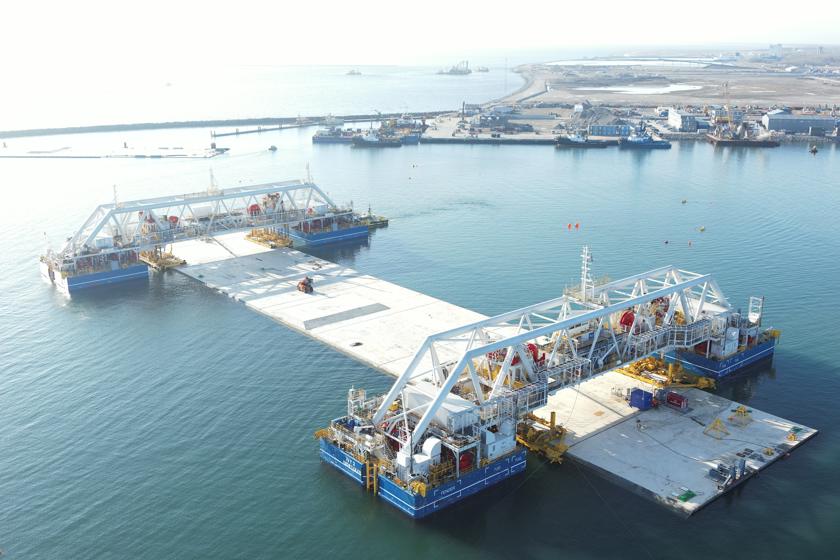
Immersion pontoon IVY
© Femern
IVY consists of two units, IVY 1 and IVY 2, which operate either separately or combined, depending on the size of the tunnel element being handled. The system is equipped with 66 winches and approximately 23 kilometres of steel wire, allowing operators to lower elements to depths of up to 40 metres with controlled precision.
Lasse Vester, Deputy Contract Director at Sund & Bælt, the owner of the 18-kilometre-long immersed tunnel between Denmark and Germany said:
IVY is a unique vessel developed exclusively for the construction of the Fehmarnbelt tunnel. Its task is complex, so a long sequence of tests had been necessary to ensure that it meets the high technical and safety requirements set by both us and the authorities. We have now approval for the vessel and are ready for immersion.
Work on the seabed trench has progressed in parallel with vessel testing. Contractors have prepared the first section by laying a level gravel foundation to support the tunnel elements.
The next stage will involve transporting the first element to the project’s work harbour, where ballast concrete will be added to ensure it can be submerged. IVY 1 and IVY 2 will then move the element into position and lower it into the trench in a controlled operation.
The immersion of the first section marks the start of a repetitive process that will be carried out a further 88 times to complete the tunnel structure.
The project has experienced delays of at least two years. Sund & Bælt has indicated that an updated construction schedule will be provided once the first elements have been successfully installed.
The Fehmarnbelt tunnel, extending 18 kilometres between Denmark and Germany, is planned to include a dual carriageway in each direction and two electrified railway lines. Once completed, the crossing is expected to reduce travel times to around 10 minutes by car and seven minutes by train, forming a fixed link between Scandinavia and Central Europe.
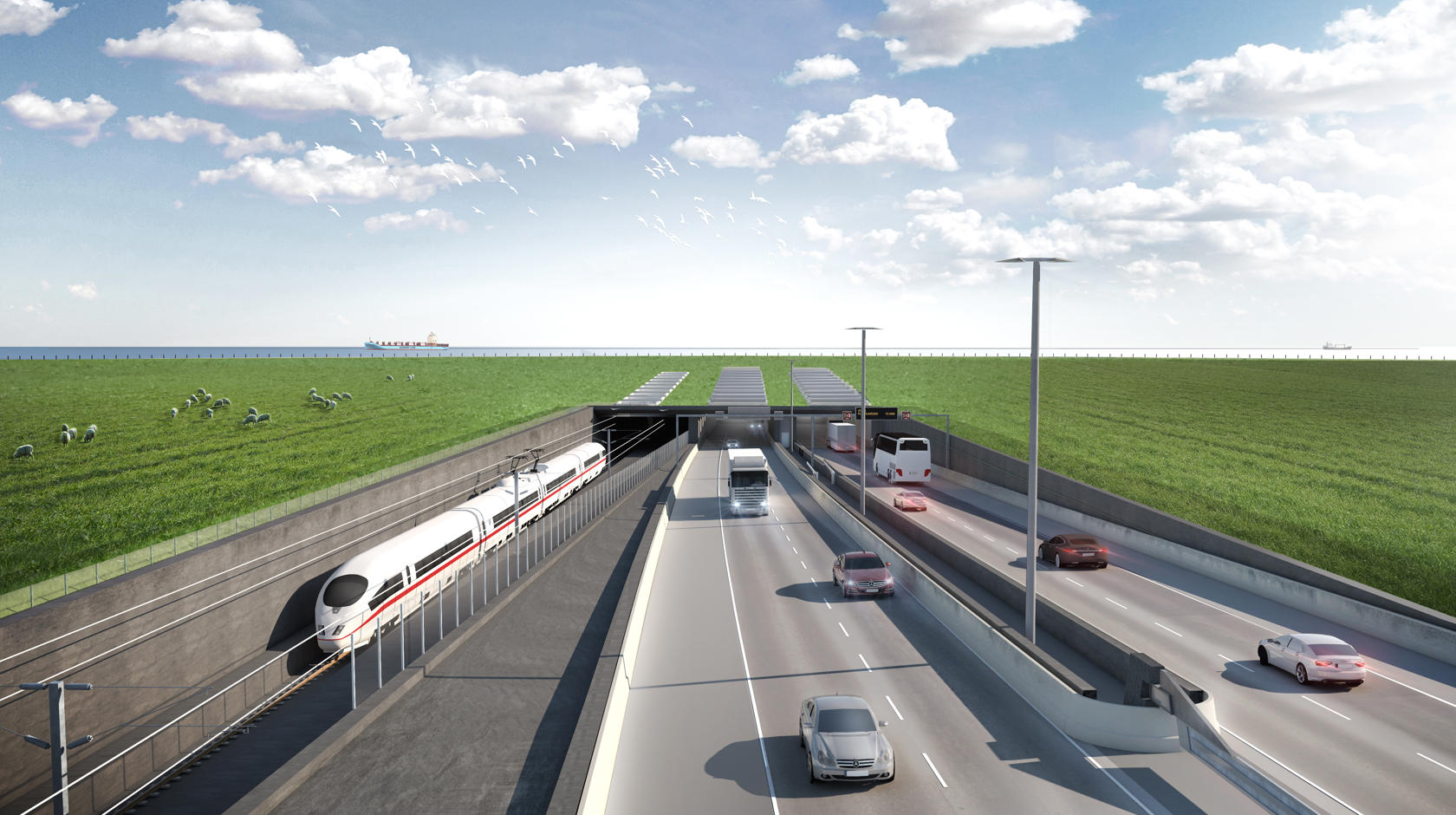
Visualisation of the portal and ramp to the tunnel
© Femern