Deputy Prime Minister for Industrial Development and Minister of Industry and Transport, Kamel Al Wazir, has stressed the importance of Egypt’s new high-speed rail network project and digital transformation in supporting both the transport and industrial sectors across the country.
Speaking during a panel discussion at an event celebrating 125 of Siemens’ presence in Egypt; the Deputy Prime Minister stated that the high-speed rail project will ‘change the concept of transport in Egypt’, linking all ports together and connecting industrial zones with seaports, as well as modern agricultural development areas with consumption areas and export ports.
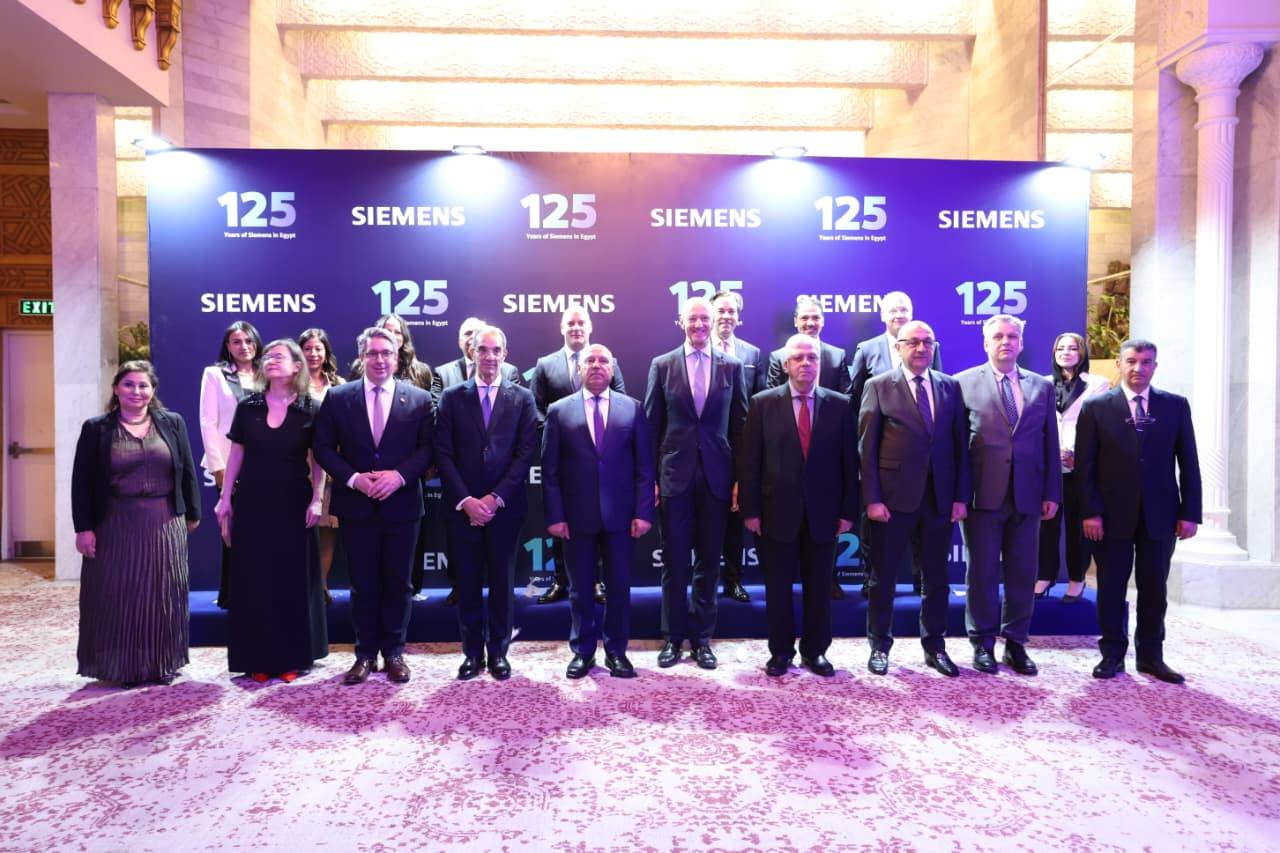
The speech was delivered at an event celebrating 125 of Siemens’ presence in Egypt
© Egypt State Information Service
Once operational, the rail project will connect the coastal cities on the Red Sea with the Delta, and will reach East Oweinat and Toshka for the first time, as well as link all Nile crossings connecting the east and west banks of the Nile. It will also contribute to the linking of tourist areas.
Al Wazir stated that the high-speed electric rail network will also create a new logistics corridor linking the Red Sea and the Mediterranean Sea, enabling full integration with airports, seaports, and road networks – realising the concept of multimodal transport and connecting seaports with both dry ports and logistics centres.
With a length of 2,000km, which is set to be increased to 2,250km in the future following the construction of a fourth line from Port Said to Alexandria, the network will be capable of transporting two million passengers per year, doubling the current available capacity of the existing railway network. Al Wazir stated that whilst the current railway network transports 4 to 5 million tonnes of freight annually, the new high-speed electric rail will transport 13 million tonnes.
The rail network will connect raw material production areas and Quarries with export ports, with the routes of the first and second lines of the network aligning with the development corridor plan first proposed by Egyptian scientist Farouk El-Baz.