DB InfraGO has begun two major rail corridor renovation projects in North Rhine-Westphalia and Bavaria, commencing extensive infrastructure works on the Hagen–Wuppertal–Cologne and Nuremberg–Regensburg lines.
Both schemes involve full route closures, diversions for long-distance and freight trains, and large-scale replacement bus services for regional passengers.
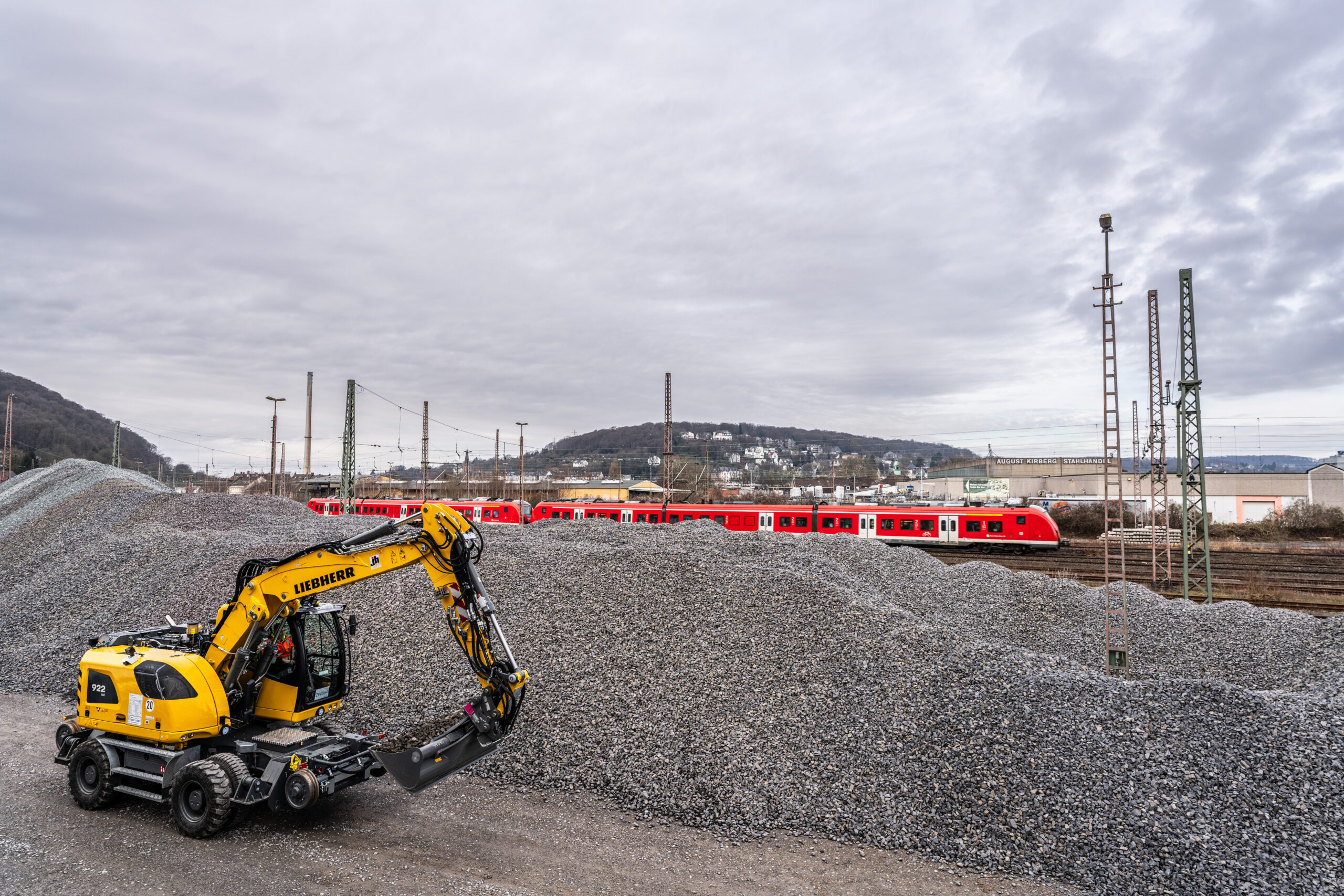
DB InfraGO begins the renovation of the Hagen – Wuppertal – Cologne corridor
© Deutsche Bahn
The Hagen–Wuppertal–Cologne project was officially launched in Wuppertal-Elberfeld by DB InfraGO chief executive Dr Philipp Nagl, Federal Transport Ministry state secretary Christian Hirte, and North Rhine-Westphalia transport minister Oliver Krischer.
Engineers will renew or refurbish 81 kilometres of track, 50 switches and 29 kilometres of overhead line equipment along the corridor between the Ruhr area, Bergisches Land and Cologne. Nearly four kilometres of new noise barriers will be installed. Twelve stations, including Wuppertal and Solingen main stations as well as several smaller stops, will be modernised with step-free access and upgraded facilities. Station works will continue beyond the main closure period into 2027.
During the closure, long-distance and freight trains will be diverted, with some services cancelled on sections between Cologne and Dortmund. Journey times on diverted routes are expected to increase by around 20 to 30 minutes. Regional and S-Bahn services will be replaced by up to 200 buses operating a mix of stopping and express routes.
Dr. Philipp Nagl, CEO of DB InfraGO said:
With the renovation of the line between Hagen, Wuppertal, and Cologne, we are consistently continuing our extensive construction program. Right in the heart of North Rhine-Westphalia, we are consolidating an ambitious construction project on one of the most important local and long-distance transport corridors, renewing tracks, switches, and overhead lines. We are also paying particular attention to twelve stations along the route. Passengers can look forward to modern and attractive stations in the future.
It is also clear that this renovation will be a real undertaking – both for our construction teams and for the affected passengers, residents, and businesses. However, I am certain that this comprehensive renovation will also be worthwhile and will ensure that the infrastructure becomes even more robust and that train traffic can run much more smoothly across Germany.
Meanwhile, DB InfraGO has also launched a full renovation of the Nuremberg–Regensburg corridor in Bavaria. The start event took place in Neumarkt in der Oberpfalz with DB InfraGO board member Gerd-Dietrich Bolte, Federal Transport Ministry state secretary Ulrich Lange, and Bavarian transport minister Christian Bernreiter.
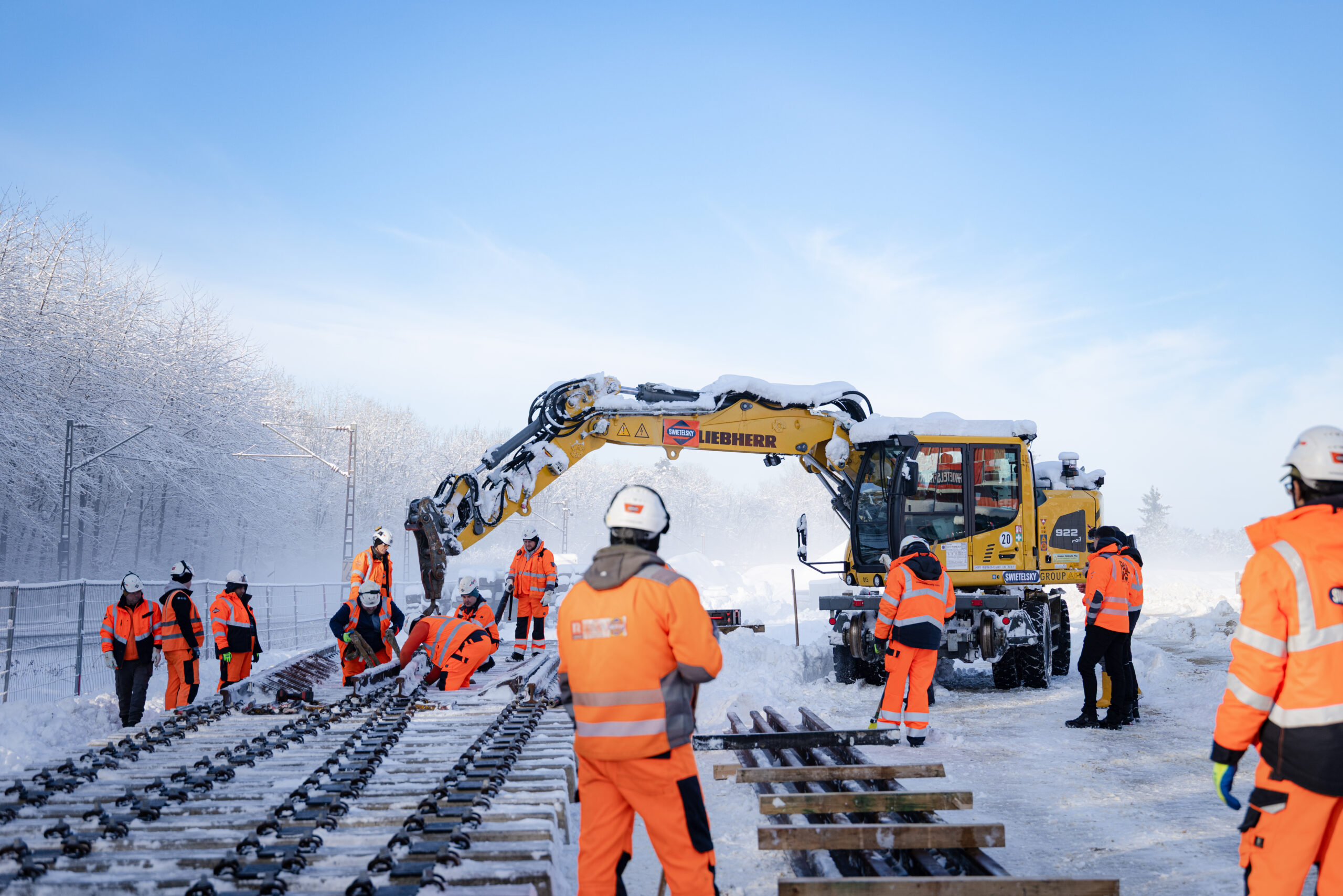
DB InfraGO starts the renovation of the Nuremberg – Regensburg rail corridor
© Deutsche Bahn
The Nuremberg–Regensburg line is around 88 kilometres long and carries more than 350 trains per day. It will be fully closed for construction until 10 July 2026. Works include the renewal or major maintenance of 96 kilometres of track, 74 switches and 81 kilometres of overhead line systems. Signalling and safety equipment will be upgraded, preparations made for the European Train Control System, and embankments and a bridge will be repaired. Twenty stations along the route will be modernised, with step-free access a central element.
Gerd-Dietrich Bolte, Board Member for Infrastructure Planning and Projects at DB InfraGO said:
With the comprehensive modernisation of the Nuremberg-Regensburg rail corridor, we are undertaking an ambitious construction project on one of Bavaria’s most important rail lines. We are extensively renewing tracks, switches, signalling and safety technology, as well as overhead lines. We are also tackling the 20 stations along the route. Passengers can look forward to modern and attractive stations in the future.
The coming months will be a demanding time for our construction teams and the affected passengers. However, I am certain that this comprehensive modernisation will be worthwhile! It will ensure that the infrastructure on our heavily used lines becomes more robust and that train traffic can run much more smoothly across Germany.