The HS2 project has reached another significant milestone with the construction of 34 cross passages along the Northolt Tunnel.
Connecting the northbound and southbound tunnels; cross passages are a safety feature that allow passengers to cross to the adjacent tunnel in the event of an emergency.
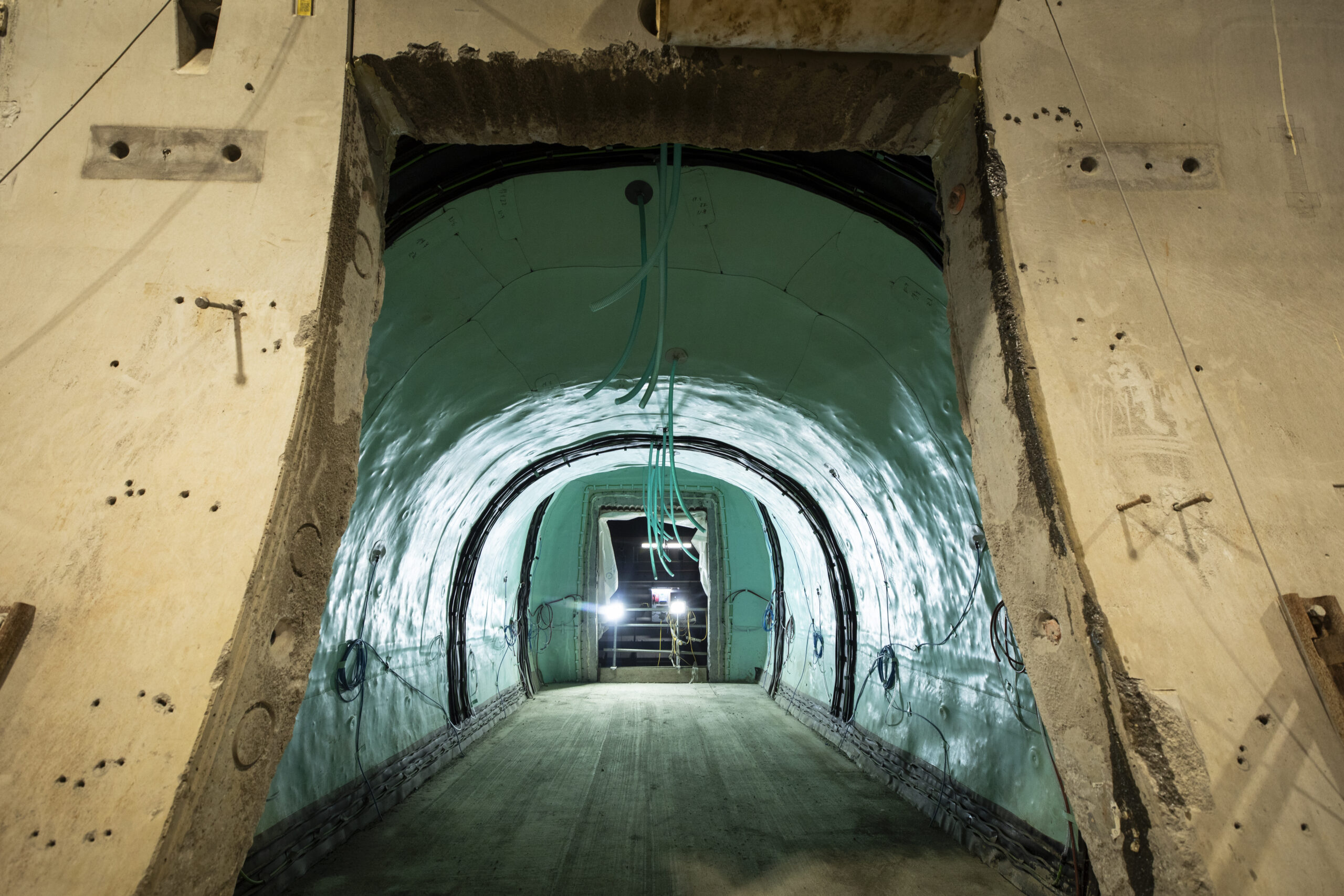
34 cross passages have been installed along the Northolt Tunnel
© HS2 Ltd
The connections, which range from 6-20 metres, have been formed using a spray concrete lining (SCL) mining technique, wherein the team cuts through the ground between the two tunnel bores.
With these passages completed, engineers will now begin installing reinforced concrete secondary collars, which will form the permanent openings for cross passage doors and enable the installation of permanent fire-rated sliding doors.
All structural works on the tunnel – which is the second longest on the 140-mile route between London and the West Midlands – are set to be completed later this year, with the tunnel set to be readied for the installation of rail systems such as tracks and overhead power in the coming years.
Malcolm Codling, Project Client for HS2 Ltd, said:
The progress made to construct the Northolt Tunnel demonstrates the commitment of our teams to deliver this vital infrastructure efficiently and safely.
Completing the construction of the cross passages is an important step towards finishing the civil engineering on the tunnel which will allow us to ultimately begin rail systems work including laying track.
Work to complete the cross passages utilised mini-excavators, with every metre of earth cut supported with sprayed concrete lining whilst the sections take shape.Once the lined tunnel is complete, teams install a water-proof membrane before applying a secondary concrete lining.
11 of the cross passages were constructed using a ground freezing technique, which was used due to the presence of water bearing soils with a high-water table found in the ground in the tunnel’s western section. This required teams to insert freeze pipes through tunnel segments in order to create a 2-metre-thick freeze wall to stabilise the ground before excavation could begin.