In a promising step for urban transit in Texas, Austin’s light rail project is firmly taking shape, with a joint venture between Stacy Witbeck and Sundt Construction recently appointed as the construction contractor. However, the first phase of the project covers only a portion of the 22 miles approved by voters, underscoring the realities of turning ambitious visions into real-world infrastructure.
In 2020, voters in Austin approved a plan to build roughly 22 miles of light rail across the rapidly growing capital. Yet, the first line now moving toward construction will measure just 9.8 miles, reflecting how large transit systems are rarely built all at once.
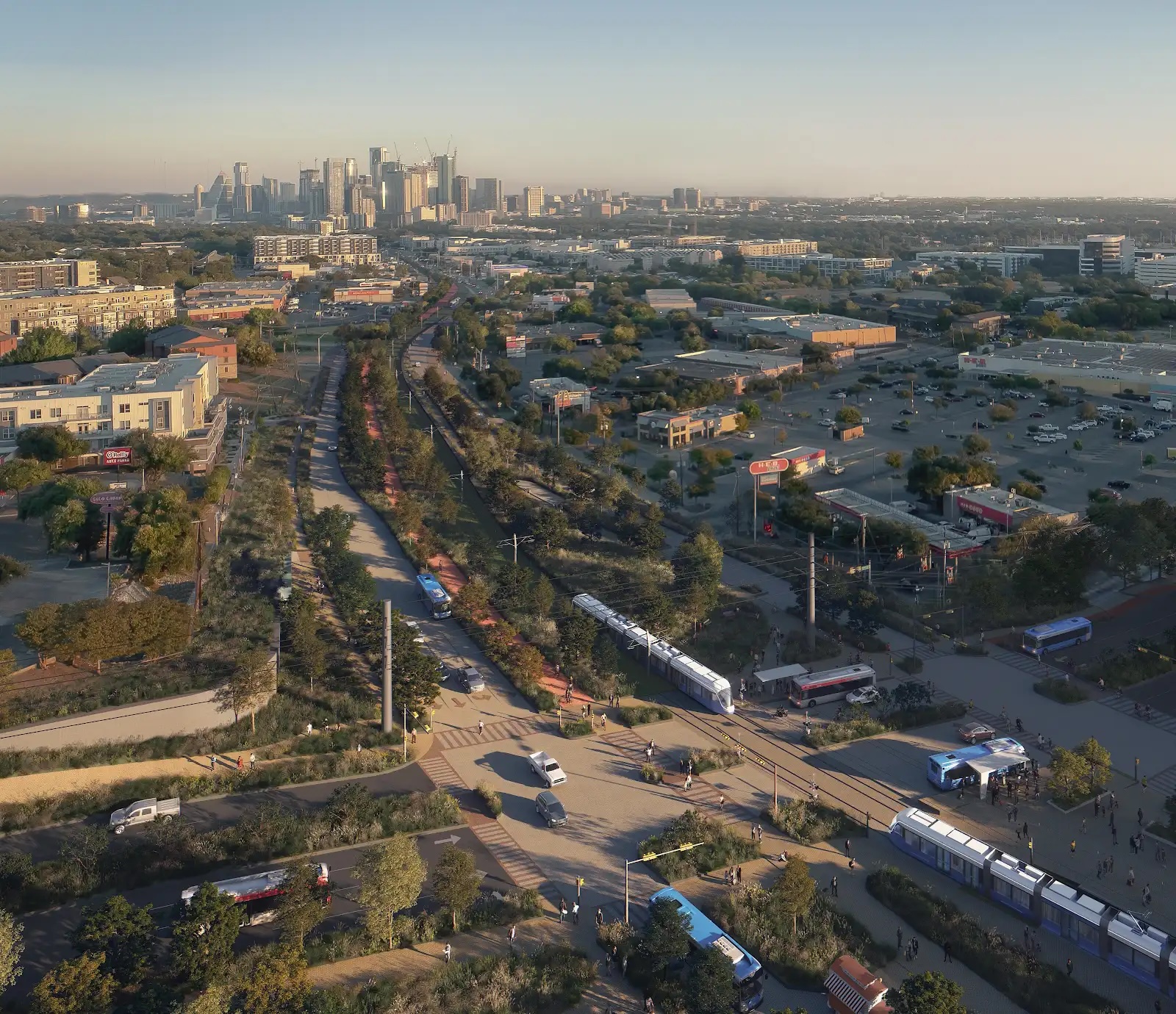
Austin Light Rail rendering
© Austin Transit Partnership
The light rail network forms part of Project Connect, a plan to expand public transportation across Austin. The proposal, approved by voters in November 2020 with roughly 60 percent support, aims to reshape mobility in a city experiencing some of the fastest population growth in the United States.
Austin’s expanding population, increasing congestion, and vibrant urban core demonstrate the need for a stronger transit network. For many residents, the vote signalled a shift toward a more connected and sustainable transportation system that will be less dependent on cars.
To deliver the scale of this vision, the rail network is being developed in stages. The first phase will focus on a 9.8-mile above-ground corridor serving 15 stops. This line is designed to establish the system’s core before future extensions can be added. As emphasised by Armando Tiscareño, Project Manager with Stacy Witbeck, a phased approach is typical for a project of this scale.
In interview with Railway-News, Tiscareño said:
Nothing gets built all at once. The initial 9.8-mile starter line follows the same major corridors as the full 22-mile plan. Over time, extensions will bring it closer to what voters approved. It’s just a matter of building in phases, making sure each piece works before moving on to the next.
The initial line follows the same central corridors envisioned in the broader plan, with extensions able to bring the network closer to the scale discussed during the 2020 campaign. Still, the difference between the original vision and the first stage illustrates the challenge in managing public expectations for major infrastructure projects. In addressing this discrepancy, Tiscareño argued that the issue was one of unclear public messaging, rather than inefficient planning.
This tension between ambition and delivery is hardly unique to Austin. Large transit projects often evolve as designs are refined, budgets shift, and engineering challenges become clearer. However, when voters approve projects based on headline numbers, changes in scope can lead to confusion or scepticism.
Maintaining public confidence therefore depends not only on delivering infrastructure successfully but also on communicating transparently how complex projects develop over time. In Austin’s case, the first phase is intended to prove the system’s value before larger expansions are built. Ultimately, the project’s success will not only depend on whether construction proceeds smoothly, but also on whether people use the service.
With 30 years of experience overseeing large-scale transit projects in Houston, San Diego, and Los Angeles, Tiscareño offers a strong foundation for achieving these goals. He leads a hand-picked team of designers, estimators, and construction managers with proven track records, giving stakeholders confidence that Austin’s phased approach will stay on schedule and budget.
Meanwhile, although American cities have historically struggled to develop successful rail systems because of sprawling development patterns and a deep cultural reliance on cars, Tiscareño argued that Austin has several advantages for leading a shift away from this reliance. For example, the city’s dense downtown, major universities, business districts and thriving entertainment scene create concentrated travel patterns that transit systems can serve effectively.
Tiscareño said:
In some cities, light rail is not successful because people love their cars. It’s not because the city doesn’t need it, or because there isn’t support. It’s just hard to get people out of their cars. A city like Austin is different. With its universities, downtown business centre, sporting events, and live music venues, the transit system can really serve the community and make getting around easier. That’s why this project has real potential to succeed here.
One of the most technically notable components of the new network will be a new light rail bridge crossing Lady Bird Lake, which is a central feature of Austin’s landscape. The crossing will carry trains through the heart of the city and could become one of the most recognisable elements of the system. For project engineers and planners, such features highlight the scale of the undertaking and the opportunity to reshape how people move through the city.
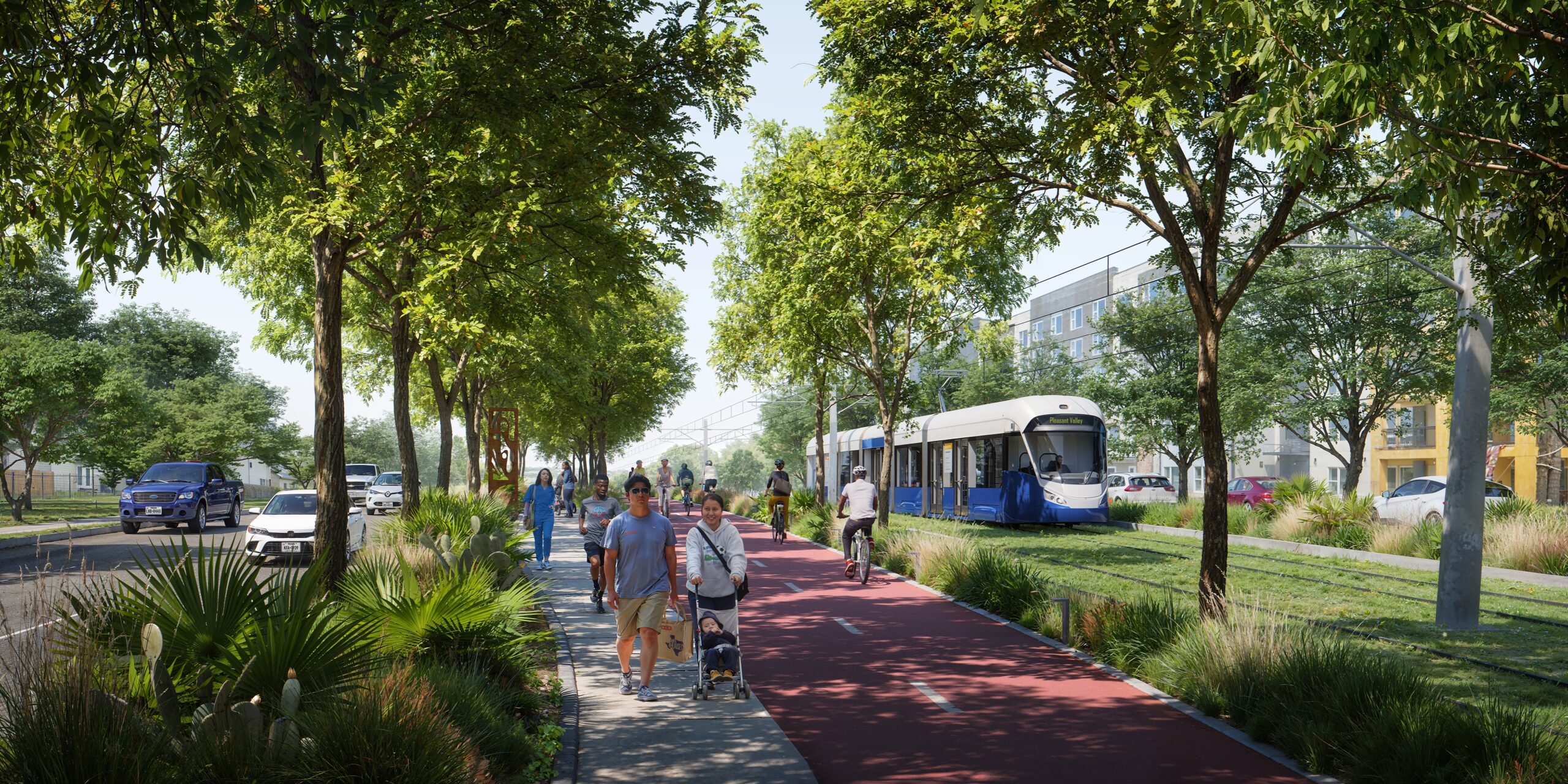
Artist conceptual visualisation, Austin Transit Partnership
© Austin Transit Partnership
The rail system is being managed by Austin Transit Partnership, an agency created specifically to implement Project Connect. Rather than relying solely on traditional contracting methods, it uses a progressive design-build approach intended to encourage collaboration between engineers, contractors and public officials. This model aims to avoid the adversarial relationships that sometimes slow large infrastructure projects by focusing all parties on the overall success of the programme.
Tiscareño said:
Everybody has the project as the primary goal. We’re making decisions that are good for the overall program.
This structure and approach help further set up the project for success. However, Austin’s light rail project currently remains at the beginning of a long process. The first 9.8 miles will not deliver the entire network voters imagined in 2020, but if people ride it, it eases congestion, and the starter line proves its value, it should pave the way for Austin to ultimately build the full system, while also delivering more near-term benefits.