Alstom has delivered the very first X’trapolis 2.0 train into passenger service in Melbourne, Australia.
The first of an initial 300 million EUR order for 25 trains placed by the Victorian Government; the train was manufactured locally by Alstom at its Dandenong and Ballarat manufacturing sites.
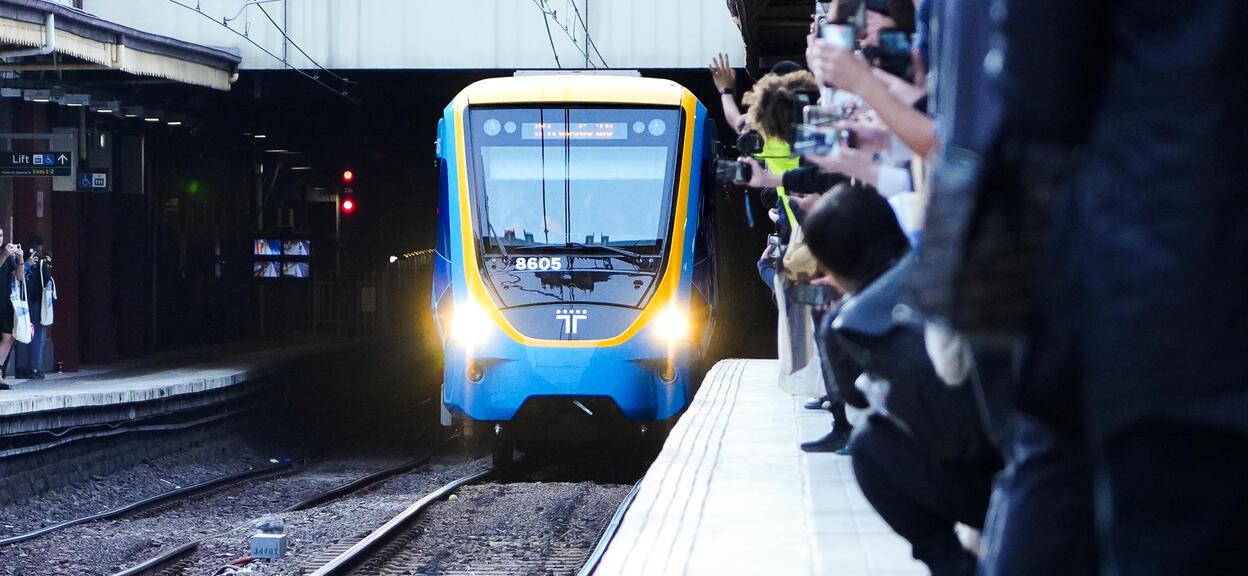
The train has been developed in partnership with the Victorian Government and is built locally by Alstom at its Dandenong and Ballarat manufacturing site
© Alstom
In addition to the delivery of the unit, the Victorian Government has also announced a budget allocation for a further 25 trains, bringing the fleet to a total of 50 X’trapolis 2.0 trains. In time, additional units will enter passenger service as the fleet rollout continues.
Guillaume Tritter Managing Director for Alstom Australia and New Zealand, said:
The entry of the first X’trapolis 2.0 train into passenger service is a proud moment for all involved.
I would like to sincerely thank the Alstom team, together with our partners at the Victorian Department of Transport and Planning and Metro Trains Melbourne, for the outstanding collaboration that made this achievement possible.
The strength of these relationships has delivered something truly significant – a train built in Victoria, for the people of Melbourne.
Based on Alstom’s Adessia commuter rail platform, the six-car electric train is capable of carrying up to 1,225 passengers and features a continuous walkthrough design, wider doors for fast boarding and a number of improvements aimed at accessibility, including 20 dedicated wheelchair spaces, pram, bike and mixed-use areas, semi-automated ramps, tactile signage, assistive hearing technologies and an updated passenger-driver interface.
In total, 58 design refinements were made during the initial design development in response to stakeholder, passenger and driver inputs.
X’trapolis 2.0 has been a notable project in part due to its minimum 60% local content requirement, which has been said to have contributed significantly to the sustainability of the broader Victorian rail supply chain, securing hundreds of skilled manufacturing roles across metropolitan and regional Victoria, as well as up to 750 jobs in the local supply chain.