Alstom has announced the delivery of Stage 2 of the Cambridge Resignalling, Relock and Recontrol (C3R) project, marking a major milestone in the modernisation of the region’s railway infrastructure.
Delivery of the 130 million GBP project, which was awarded to Alstom in 2022, was predominately carried out over the Christmas period; with Alstom teams working at all hours of the day and night in order to complete all necessary components.
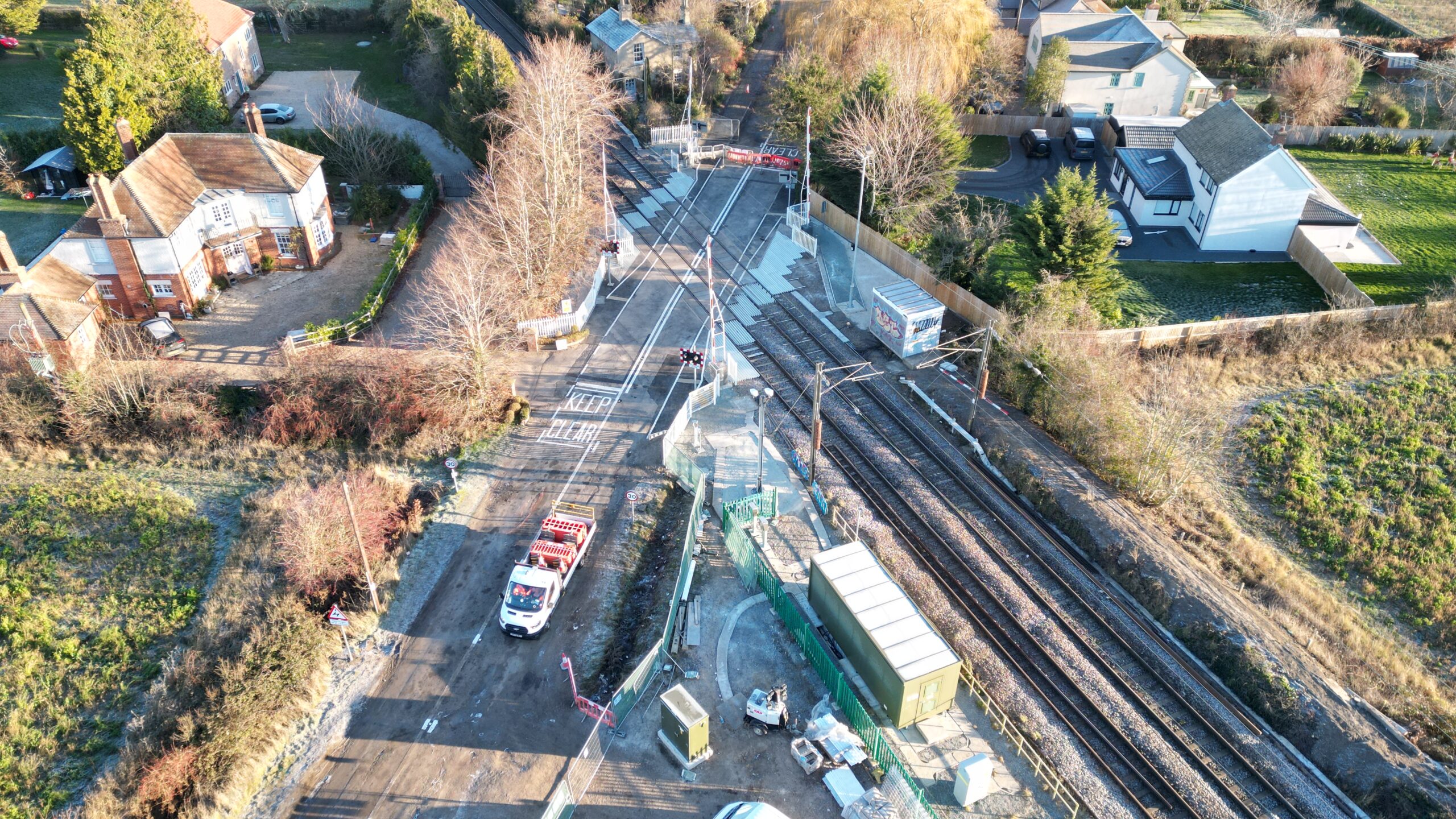
Alstom successfully delivered Stage 2 of the Cambridge Resignalling, Relock and Recontrol (C3R) project on Monday 5 January 2026
© Alstom
The project involved the reesignalling, relocking and recontrol of the area north of Cambridge railway station, through the new Cambridge South station and, and continuing down to the boundaries at Great Chesterford and Foxton; the replacement of the NX (eNtry-eXit) panel at Cambridge powered signal box (PSB) with two state-of-the-art Modular Control Systems (MCS); and the upgrade of the Meldreth Road level crossing from Automatic Half Barrier (AHB) to a full manually-controlled barrier MCB-CCTV system.
Necessitating full possession of Cambridge railway station and its surrounding routes; the work was carried out over an 11 day period between Christmas Day (Thursday 25 December 2025) and the morning of Monday 5 January 2026, during which time roughly 250 people per shift worked across 23 shifts, totalling more than 50,000 hours undertaken by Alstom and its associates – the largest single UK re-signalling project to date.
Emmanuel Henry, Digital and Integrated Systems Managing Director UK and Ireland at Alstom, said:
This successful commissioning demonstrates Alstom’s commitment to delivering cutting-edge signalling solutions that enhance safety and efficiency across the UK rail network. We are proud to play a key role in transforming the Cambridge area for the benefit of passengers and operators alike.
The achievement reflects the dedication and professionalism of everyone involved – from installation and testing crews to engineering, planning, safety, logistics and project leadership. Alstom extends its gratitude to Network Rail and our supply chain for their trust and support throughout this project.
The Cambridge Stage 2 works form a key component of a 200 million GBP investment from Network Rail to modernise signalling across the region, replacing equipment that has been in use for more than 40 years, as well as provide a platform ready for digital technologies including the European Train Control System (ETCS).
Expected to deliver improved reliability and operational flexibility; the new system has been built around Alstom’s Smartlock 400 interlocking technology and MCS Infinity control platform. It is also set to support future projects, such as the opening of Cambridge South railway station later this year.
Resignalling work affected more than 100 signals, 76 point machines and over 300 axle counter sections, with 323 signalled routes now controlled from a set of two new interlockings. Nine level crossings were recontrolled, as were the SSI and RRI interlocking south of Whittlesford.
The Meldreth Road level crossing was reopened to road users a week early after the successful upgrade to a manually controlled barrier with CCTV – with the site now using full barriers connected to the main signalling system and operated remotely.
Darren Hay, Senior Portfolio Manager for C3R at Network Rail, said:
Re-signalling projects of this size and complexity are not easy to deliver, but the determination and professionalism shown by the project and operations teams, and in collaboration with the train operating companies, has been exemplary.
The successful completion of Stage 2 is a testament to how well everyone worked together to plan and deliver this commissioning stage for Cambridgeshire with the accuracy and control required to be able to hand the railway back to passengers on time. A huge thank you and well done to colleagues at Network Rail, Alstom, their supply chains and the operations staff.
Alstom will now begin work on Stage 3 of the project for the remainder of 2026 – which will include most of the level crossing works and recontrol of the Ely to Norwich route, whilst Stage 4 will bring control of the Newmarket and Bury St. Edmunds resignalling into use during 2027.