Last week, Chancellor of the Exchequer Rachel Reeves confirmed 1.1 billion GBP in funding to revive the Northern Powerhouse Rail (NPR) project.
The funding will support planning, development and design work, with benefits expected to be delivered from the 2030s. Meanwhile, Network Rail has emphasised that the Transpennine Route Upgrade (TRU) is already delivering infrastructure and skills that will support the future NPR network.
TRU is upgrading the 70-mile Transpennine main line between York and Manchester to provide a fully electrified railway with increased capacity, which future NPR services are expected to use.
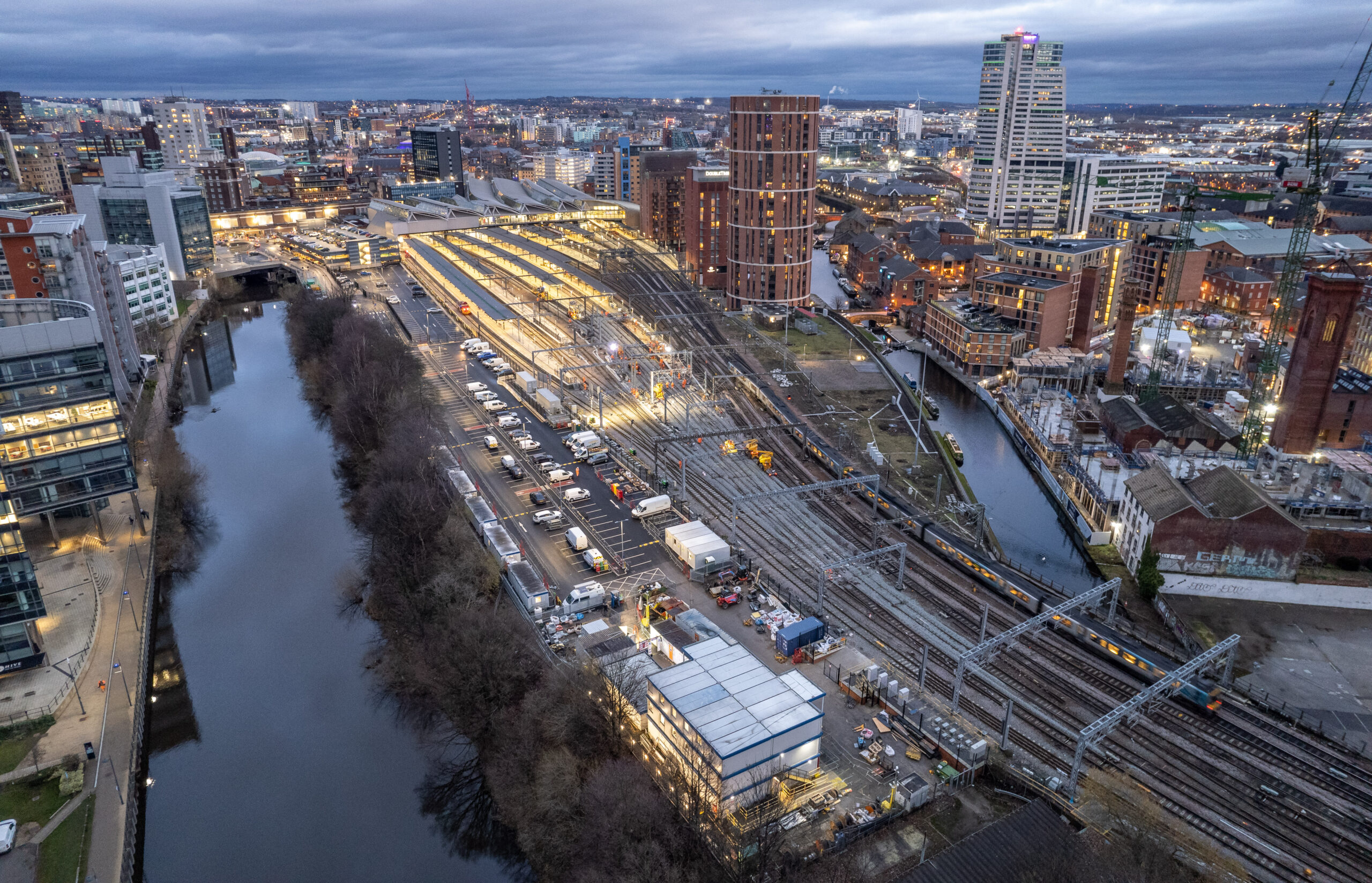
Transpennine Route Upgrade lays the foundations for a better-connected North
© Network Rail
The 11 billion GBP TRU programme remains on schedule and within budget. Its work is intended to support faster, more reliable journeys and reduce carbon emissions by enabling electric train services across the route.
James Richardson, Managing Director for the Transpennine Route Upgrade said:
The Transpennine Route Upgrade is already delivering the skills and capability that Northern Powerhouse Rail will build upon along with delivering some of the infrastructure required for its success.
We are proud to be part of creating an improved, more reliable railway that communities and businesses can rely on – delivering faster, more comfortable journeys, greater capacity, and a better overall experience for passengers, while helping to unlock investment that will support long-term economic growth.
Significant progress has already been made on the TRU project. Around a quarter of the route is now electrified, supporting cleaner and more reliable services. More than 40 miles of track have been laid to date, with work underway at 23 stations and on 285 bridges and viaducts. The programme currently employs over 5,000 people, with more than 85 percent living within 40 miles of the route.
TRU forms the first phase of Northern Powerhouse Rail under the Integrated Rail Plan. Its scope has been designed to avoid future rework and reduce overall costs, while enabling NPR’s future delivery. This includes reducing journey times between Manchester and Leeds to 42 minutes and providing capacity and gauge clearance for up to 15 additional intermodal freight paths each day.
Key elements of the upgrade that support NPR include the addition of two extra tracks between Ravensthorpe and Dewsbury, grade separation near Huddersfield to allow fast trains to pass stopping services, and additional platform capacity at Huddersfield station.
Passive provision is also being made for further four-tracking between Cross Gates and Garforth, as well as additional capacity between Marsden and Huddersfield. Digital signalling is being introduced between Stalybridge and Colton on the East Coast Main Line to increase capacity for future services.
Beyond physical infrastructure, the programme is contributing to the regional economy. More than 850 million GBP has been spent with local suppliers, and over 450 apprentices have started their careers on the project. Investment in skills and training is intended to ensure long-term benefits beyond the completion of construction.
The confirmation of funding for Northern Powerhouse Rail highlights the importance of coordinated, long-term investment in the North’s rail network. The work being delivered through the Transpennine Route Upgrade is intended to ensure the existing railway is ready to support future NPR services, improving journey times, capacity and reliability for both passengers and freight.