Learn how ICL inspection helps rail fleets extend component life, reduce replacement costs, and improve maintenance predictability through AAR-based inspection and reconditioning standards.
In heavy haul rail operations, one of the most expensive maintenance decisions is not repair. It is replacement. When a side frame or bolster approaches its service limit, fleet managers are forced to decide whether to purchase new castings or determine if the existing asset can safely deliver additional years of service.
That decision is not just mechanical. It is financial.
COMET Industries’ Increased Component Life certification, known as ICL, transforms inspection from a basic compliance checkpoint into a structured capital management strategy. Built on the foundation of Association of American Railroads standards, ICL inspection adds a higher level of validation designed to support up to 15 additional years of controlled service life when paired with disciplined reconditioning.
The Foundation: AAR Compliance Comes First
Before an inspection can be classified as ICL, it must first meet the industry’s established baseline. ICL inspection is grounded in AAR M 214 requirements, which govern the reconditioning of side frames and bolsters.
All baseline classification, inspection, and repair criteria remain mandatory. AAR certified quality systems ensure that each inspection is repeatable, auditable, and consistent. Traditional AAR inspection answers a critical operational question. Is this component acceptable for reuse at this time?
ICL inspection adds a second layer of validation. It evaluates whether the component can continue delivering structural reliability and predictable performance through an extended service lifecycle. It does not replace AAR compliance. It builds upon it to support a longer term capital strategy.
What ICL Inspection Is Designed to Validate
The primary differentiator of the ICL process is its intent. It is engineered to validate performance in a way that protects both operational reliability and financial outcomes.
- Capital Investment Protection: Confirming that a reconditioned component can continue generating value instead of requiring immediate replacement.
- Fatigue Resistance: Evaluating metal condition with extended load cycles in mind to reduce the likelihood of premature removals.
- Dimensional Consistency: Maintaining precise geometry to ensure proper load distribution and limit secondary wear on adjacent components.
- Reduced Variability: Minimizing performance gaps between components within a fleet to stabilize maintenance costs.
- Predictability: Providing documented validation that supports long term lifecycle planning and capital forecasting.
Step-by-Step: The ICL Inspection Process
To achieve these objectives, the ICL process follows a disciplined, multi stage workflow focused on long term reliability and cost control.
- Component Preparation and Cleaning
Inspection begins with complete removal of coatings, corrosion, and debris to expose the base metal. Proper preparation ensures that fatigue indicators and surface anomalies are visible and measurable. Accurate lifecycle decisions depend on complete inspection visibility.
- Visual and Surface Inspection
Inspectors analyze more than obvious cracks. Wear patterns, deformation, and stress indicators are evaluated to determine whether the component can support extended service life rather than simply immediate return to service.
- Dimensional Verification
Critical features are gauged to confirm geometry supports proper load transfer. Controlled dimensional correction during reconditioning reduces uneven load paths that can accelerate fatigue and increase downstream maintenance costs.
- Non-Destructive Evaluation
Magnetic particle testing or equivalent methods are applied to high stress zones to detect subsurface defects. Identifying these conditions before they propagate under extended service cycles is essential to preventing premature scrap decisions and unplanned capital expenditures.
- Repair Validation
When material restoration is required, weld repairs are inspected to confirm compliance with controlled procedures. The objective is structural restoration that supports fatigue resistance and long term performance, not cosmetic correction.
The Link Between Reconditioning and Inspection
Inspection alone does not extend component life. It validates that reconditioning has been performed to a level capable of supporting extended service.
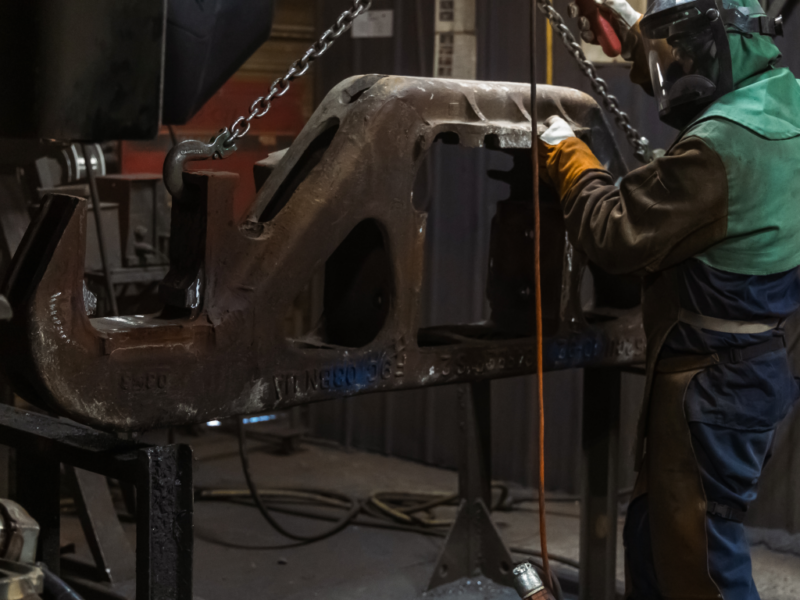
For a component to meet ICL standards, reconditioning must involve controlled welding, disciplined heat application, and precise dimensional correction. Inconsistent processes introduce variability and residual stress, increasing the probability of repeat removals and added lifecycle cost.
ICL inspection serves as final confirmation that reconditioning has restored structural capability to a level that supports predictable performance and controlled capital planning.
Preventing Failure Chains
Component level variability can compound across the entire truck assembly. Uneven geometry or undetected fatigue can accelerate wear on surrounding components, increasing maintenance frequency and cost.
By verifying geometry, fatigue resistance, and repair integrity, ICL inspection reduces stress transfer and slows fatigue progression. The result is fewer unexpected removals, fewer emergency shop events, and more stable maintenance planning. Controlled validation at the component level supports cost control at the fleet level.
Documentation and Lifecycle Control
A defining element of the ICL process is documentation. Inspection results create traceability between the component, its reconditioning history, and its validated service expectations.
This documentation enables fleet managers to forecast maintenance cycles and replacement timing with greater accuracy. Inspection becomes more than a one-time event. It becomes a data point in structured lifecycle and capital management decisions.

Operational and Financial Benefits
The discipline of ICL inspection produces measurable economic advantages:
- Capital Deferral: Extending usable life and delaying high-cost new casting purchases.
- Lower Total Cost of Ownership: Reducing repeat removals and secondary wear across the truck assembly.
- Budget Stability: Supporting multiyear forecasting for maintenance and replacement cycles.
- Reduced Scrap Volatility: Minimizing unexpected inspection failures that force emergency spending.
- Improved Asset Return: Maximizing the value extracted from the original casting investment.
Conclusion: Inspection as a Lifecycle Strategy
ICL inspection represents a shift in perspective. Built on AAR certified standards and strengthened through additional lifecycle validation, it provides fleets with a structured alternative to immediate replacement.
When disciplined reconditioning is combined with rigorous inspection and documentation, inspection evolves from a compliance requirement into a capital management tool. By validating predictable extended service life, COMET Industries helps fleets protect operational performance while safeguarding long term capital investment.
FAQs
What is an ICL inspection in rail operations?
An ICL (Increased Component Life) inspection is an advanced inspection and validation process that builds on AAR standards to help extend the usable life of rail components through controlled reconditioning and lifecycle verification.
How does ICL inspection differ from standard AAR inspection?
Standard AAR inspection determines whether a component is safe for immediate reuse. ICL inspection goes further by evaluating whether the component can reliably perform through an extended service lifecycle.
What components are typically evaluated during ICL inspection?
ICL inspections commonly focus on side frames and bolsters used in heavy haul rail operations, particularly components undergoing reconditioning for extended service life.
How does ICL inspection help reduce rail maintenance costs?
By validating extended component life, ICL inspection helps fleets delay costly casting replacements, reduce unexpected removals, improve maintenance planning, and lower total cost of ownership.
Why is documentation important in the ICL inspection process?
Documentation provides traceability for inspection history, repair validation, and lifecycle expectations, helping rail operators improve capital forecasting and long-term asset management decisions.
This article was originally published by COMET Industries.
Tags
Products & Services