New data from DB InfraGO’s 2025 condition report shows that the German rail network has begun to stabilise, with the average condition rating for the entire rail network remaining at 3.00 – the same level as the previous year.
Data suggests that a long-term downward trend has now been halted, with station ratings improving slightly and achieving a rating of 2.96 compared to 3.03 in 2024, a change DB InfraGO has attributed to the modernisation of 124 stations along the network.
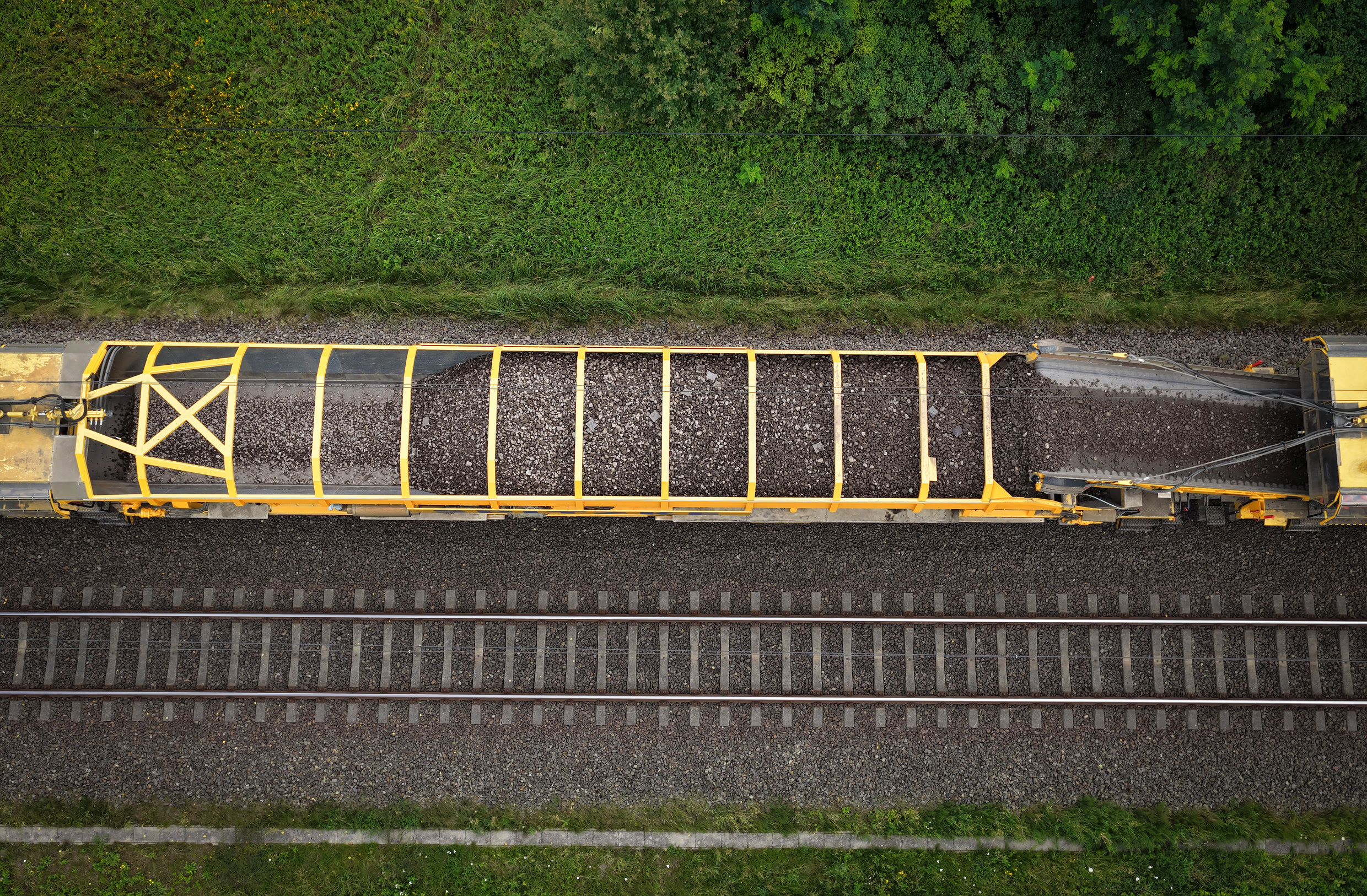
Data from DB InfraGO’s latest report shows that the German rail network has begun to stabilise
© DB InfraGO
DB InfraGO’s annual report examines more than 380,000 track and station infrastructure components and rates them using a school grading system, with all bridges, tunnels, retaining structures, tracks, switches, level crossings, signal boxes, overhead lines, and station infrastructure components assessed.
Evelyn Palla, CEO of Deutsche Bahn, said:
The worst of the unchecked aging of our rail infrastructure appears to have come to an end. The overall rating of our rail network remains at the 2024 level – a sign that the turnaround has not yet been completed. Many facilities and stations are still in poor condition.
Therefore, we must continue to modernise and renew them consistently. The path to a modern rail network is still long. It is crucial that the public sector continues to provide sufficient funding so that we can reduce the investment backlog as quickly as possible.
In 2025, around 1,900 kilometres of track and 1,900 switches were renewed, whilst construction work was carried out at over 950 stations (including the renewal of 250 elevators and escalators). The newly modernised portfolio also includes 103 bridges with a total area of approximately 25,000 square metres, and 3,700 signalling and safety control units.
Additional funding of 1 billion EUR was also received from the federal government to secure investments in particularly complex bridges, as well as modern signalling and safety technology.
Overall, the proportion of all infrastructure across the rail network requiring renewal due to its condition (rated 4 or lower) now stands at 16.1% – down 0.7% on 2024.
With an increase of 0.10 points, the structural engineering sector – bridges and culverts – improved slightly compared to the previous year, reaching 2.59.
Meanwhile, the condition rating for the overall track superstructure – tracks and switches – deteriorated by 0.06 points to 3.02 in 2025. This, according to DB InfraGO, is due to 9,600 kilometres of track requiring renewal, which are currently rated at 3.00 (down from 2.91 in 2024).
The condition rating for switches deteriorated from 3.06 to 3.05 – a drop of 0.01 – with approximately 15,800 of the 64,000 switches across the network requiring renewal.
Signal boxes once again received the worst condition rating across all sectors in 2025 (4.02, 4.12 in 2024), with half of the approximately 4,000 signal boxes requiring modernisation. Ratings for level crossings has also deteriorated from 3.58 to 3.65.
Station facilities have improved, however, the operator has stated that there is still a ‘significant need for modernisation’, particularly in station buildings, information and telecommunications systems, and elevators.
Overall, track infrastructure across the country paints a close picture. Eastern German states, which have invested extensively in the modernisation of rail networks since reunification, continue to outperform the rest of Germany, with scores ranging from 2.65 (Thuringia) to 2.89 (Brandenburg). Hesse follows with 2.95. North Rhine-Westphalia again has the lowest overall score at 3.26.
Dr. Philipp Nagl, CEO of DB InfraGO AG, said:
In 2025, we invested around 19.9 billion EUR in maintenance and replacement projects, thus preventing further deterioration of the infrastructure’s condition – despite the parallel increase in the average age of our infrastructure.
The investments are paying off. The increased construction volumes in 2025 led, for the first time in years, to a lower figure for the renewal needs of infrastructure rated as poor, inadequate, and restrictive. The 2024 report identified around 110 billion EUR for this purpose; in 2025, this figure fell to around 106 billion EUR.