The Government of Ontario, the Government of Canada and Metrolinx have awarded the first major contract for the Hamilton Light Rail Transit (LRT) project.
The contract has been awarded to the Hamilton Transit Alliance, led by Aecon Infrastructure, with design support from Hatch, Egis and Systra. The selection follows a competitive procurement process.
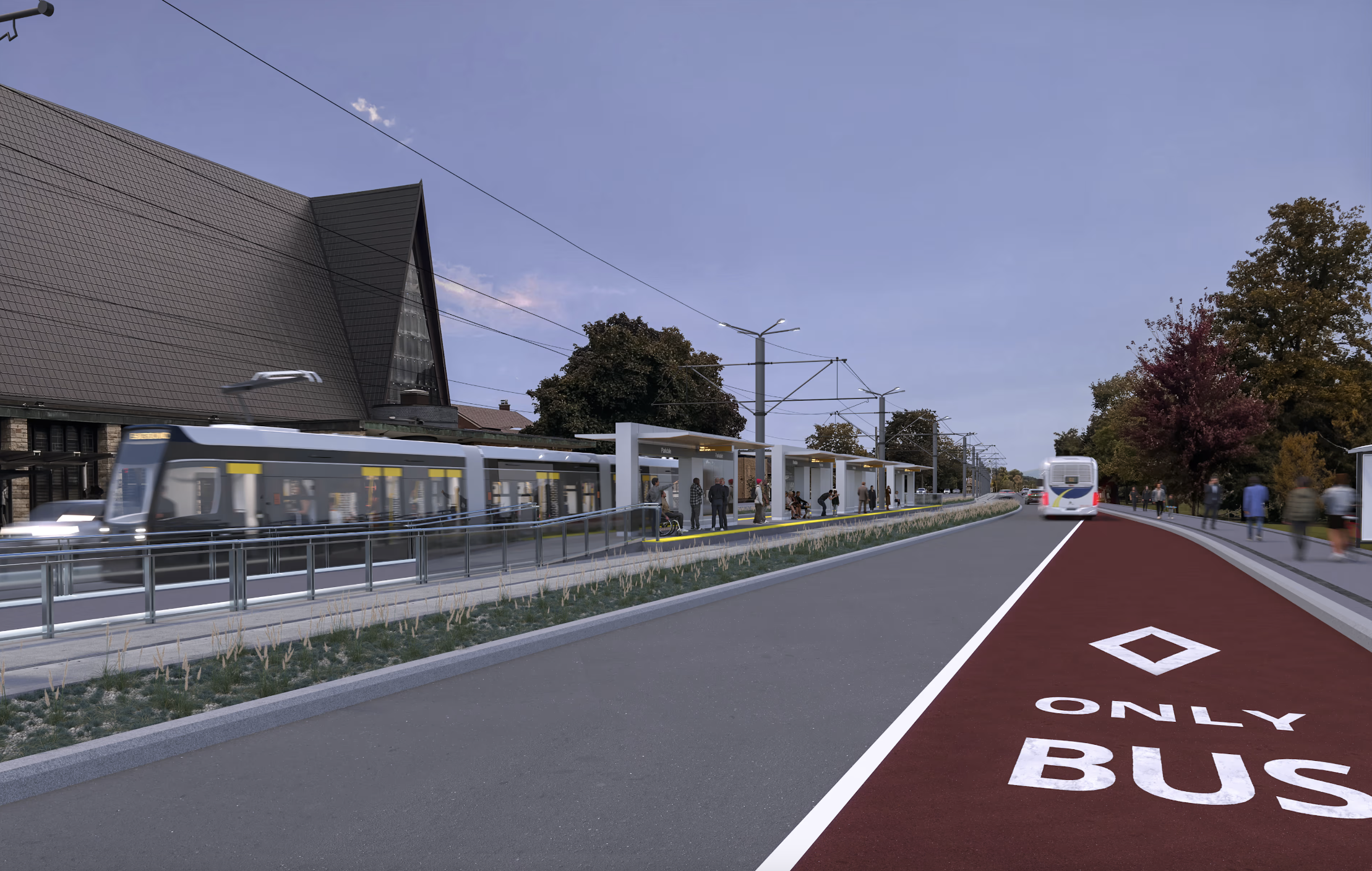
An artist’s rendering of the future Parkdale stop
© Metrolinx
Work covered under this contract centres on early-stage construction and preparation along the proposed LRT route. This includes utility relocations, grade separations, road rebuilding, and improvements to pavements and traffic control systems.
The planned light rail line will extend for around 14 kilometres through Hamilton, linking key locations such as McMaster University, Hamilton Stadium, Eastgate Square, Ottawa Street, Gage Park and the city centre. The route will incorporate 17 stops and is intended to connect with existing local and regional transport services.
Forecasts for the scheme suggest it could enable approximately 16,400 additional daily trips and carry up to 50,000 passengers each day once in service.
Early construction activity is already underway, including preparatory works and utility relocation. Alongside the transit line, the project will deliver wider infrastructure upgrades across the city. These include 14 kilometres of sewer replacement and separation, 16 kilometres of watermain renewal, 14 kilometres of reconstructed roads, 28 kilometres of improved pavements, and upgrades to 62 traffic signals.
Following the contract award, the project will now move into an alliance development phase lasting between 18 and 24 months. During this period, detailed designs, costings and the construction schedule will be developed.
The alliance delivery model brings public and private sector partners together within a single structure, with the aim of supporting collaborative planning and shared decision-making.
A further procurement process is expected to take place at a later stage, covering stops, rail infrastructure and operational systems.