A new draft business plan for California’s high-speed rail project proposes changes to construction sequencing, funding strategy and delivery timelines, as state officials consider the next phase of the scheme.
The document, published on 29 April 2026 by the California High-Speed Rail Authority, sets out a shift from the current legal requirement to complete a Central Valley segment before extending the line to coastal regions.
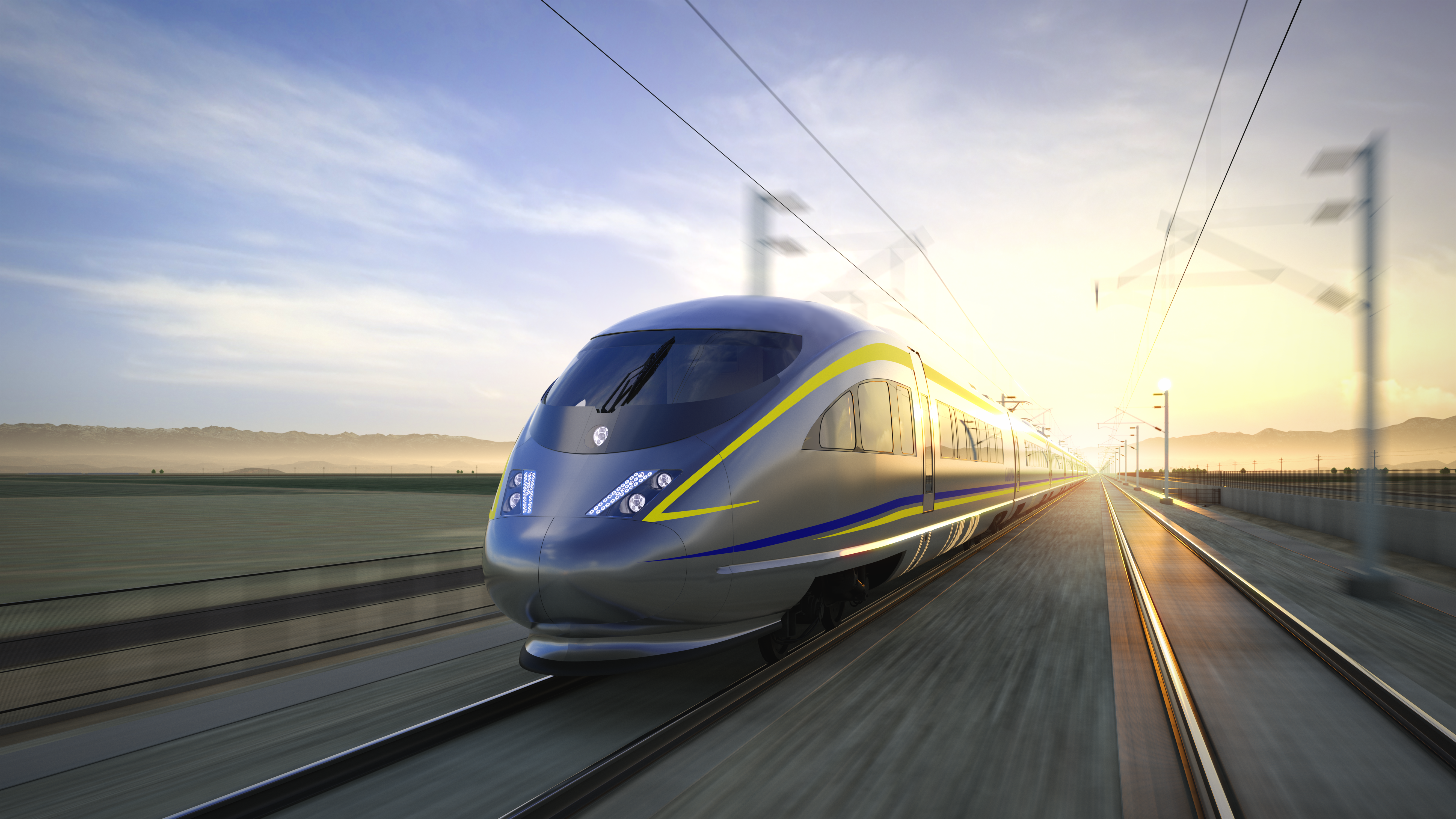
The California High Speed Rail system plans to run from San Francisco to Los Angeles in under three hours at speeds of over 200 miles per hour
© State of California
Under existing legislation, the authority is limited to building a 171-mile double-track route between Bakersfield, Fresno and Merced. Work on connecting tunnels through mountain ranges towards the San Francisco Bay Area and Los Angeles cannot begin until that section is finished.
The draft plan proposes amending this approach by allowing tunnel construction to start earlier, while initial train services could operate on single-track sections, with infrastructure designed for later expansion.
Development Scenarios
Three potential delivery options are outlined, depending on the level of financial support approved by the state legislature.
The first option would complete only the Central Valley line using currently identified funding. This section could open in 2033, operating eight return services each day. Plans include relocating stations in Bakersfield and Merced to sites outside city centres to reduce construction costs.
The second option would extend the route north towards the San Francisco Bay Area. New high-speed infrastructure would be built between Madera and Gilroy, with onward connections provided via existing commuter rail operated by Caltrain. This scenario assumes upgrades and electrification of tracks shared with freight operator Union Pacific. The estimated opening date is 2039.
The third option includes both the northern extension and a southern connection towards Los Angeles. This would involve constructing new track and tunnels between Bakersfield and Palmdale, alongside improvements to the Metrolink network to allow high-speed trains to reach central Los Angeles. This configuration is projected to open in 2040.
Funding
The authority reports that around 39 billion USD in funding has been secured through to 2045, which broadly aligns with the cost of completing the Central Valley segment alone. Estimated costs increase to approximately 60 billion USD for the Bay Area extension and 126 billion USD for the full route between San Francisco and Los Angeles.
Forecasts in the draft plan suggest that expanded services could generate higher passenger demand and revenue. The authority estimates annual income of at least 1.2 billion USD under the second option, rising to more than 3 billion USD under the third, with operating costs lower than projected revenues in both cases.
The authority’s Chief Executive, Ian Choudri, has presented the proposals to a California State Senate committee responsible for oversight of the scheme. Its recent measures have focused on reducing costs through procurement changes and revised design approaches, alongside efforts to secure private investment and identify additional revenue streams.
The state has committed around 20 billion USD in funding over a 20-year period, which is expected to support completion of the initial Central Valley segment and provide a basis for attracting further private capital for extensions towards the Bay Area and Southern California.
Andy Kunz, CEO of U.S. High Speed Rail said:
High-speed rail is moving full speed ahead in California with an aggressive plan to contain costs and accelerate delivery. The way is now clear for this project to give Californians what they want and deserve—a world-class electric bullet train that will transform the state’s transportation system and economy.