Austin Transit Partnership (ATP) has selected Kiewit Austin Partnership (KAP) as the design and build contractor for the Operations and Maintenance Facility (OMF) that will support Austin’s planned light rail system.
KAP is a joint venture between Kiewit Building Group Inc. and Austin Commercial. The appointment follows approval by the ATP Board, allowing work to begin on early-stage activities such as design development, permitting and site preparation.
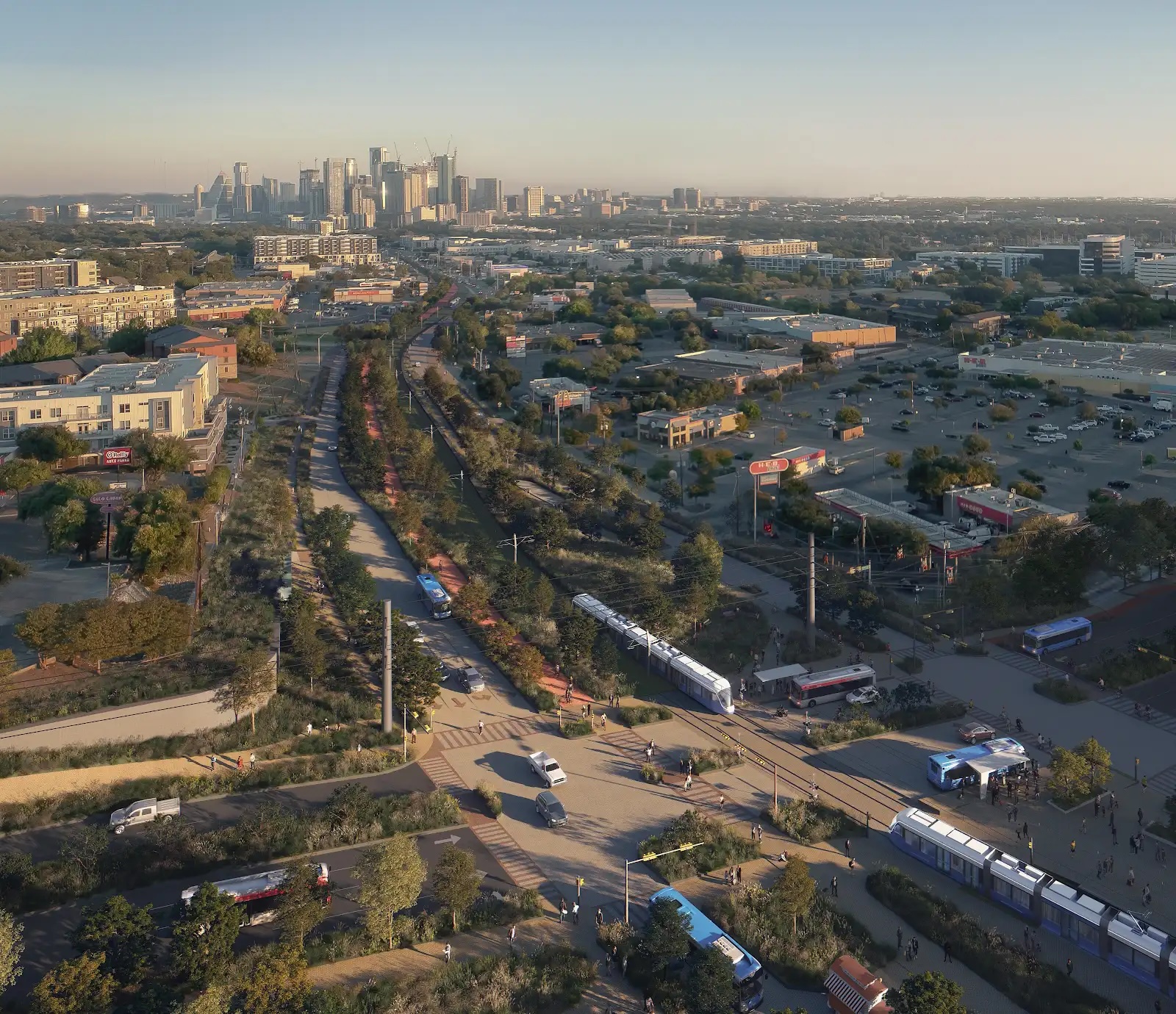
Austin Light Rail rendering
© Austin Transit Partnership
ATP CEO Greg Canally said:
This is another major step forward, and we now have the full construction team that will deliver Austin’s light rail system. The Operations and Maintenance Facility is integral to the success of the system—it’s where trains are maintained, cleaned and prepared for service each day. By bringing together a world-class construction partner with deep local experience, we are setting this project up for long-term success while creating jobs and economic opportunity across Central Texas.
The OMF will be used to store, service and dispatch light rail vehicles. It will also provide workspace for operations staff, maintenance crews and other personnel responsible for running the system.
The contractor was selected following a competitive procurement process that assessed experience, staffing, technical proposals and design approaches. ATP said the process was completed in around one year.
Mike Johnson, executive vice president of Kiewit Building Group Inc. said:
Kiewit brings extensive experience delivering complex transit infrastructure and design-build projects across North America. We’re proud to support this important investment in Austin’s mobility and deliver a high-quality project that will serve the community for years to come.
The design phase will involve around ten subcontractors, with approximately half based in the Austin region. The project is expected to create jobs during both the design and construction stages, with additional long-term roles once the facility becomes operational.
Initial work will include field investigations, coordination with utility providers and preparation of permit applications. The contractor team will also work from ATP’s offices during this phase.
The facility is intended to be integrated with its surrounding area, with attention given to safety, operational needs and working conditions.
Austin’s light rail system is planned to include 15 stations along a route of nearly 10 miles. Electric trains are expected to run at intervals of five to ten minutes for much of the day, with the system designed to allow for future expansion.