Stadler has been contracted to modernise 93 GTW multiple-unit trains currently operated by the Swiss regional railway company Thurbo and sell them to Hungarian State Railways (MÁV).
Under the agreement, the trains will be refurbished and adapted for use on the Hungarian rail network, providing additional passenger capacity and extending the service life of the vehicles.
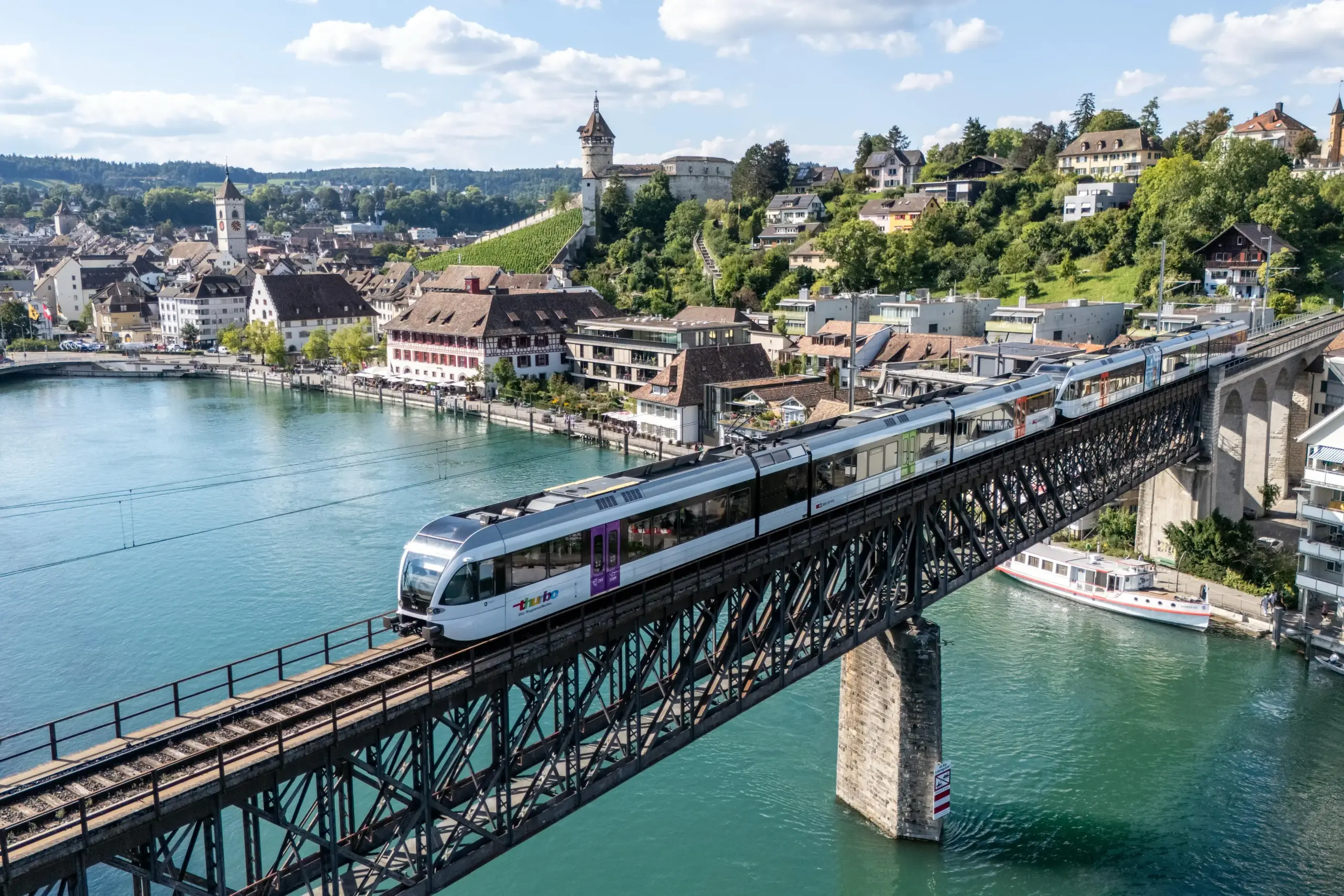
Stadler will comprehensively modernize 93 GTW trains of the Swiss railway company Thurbo and sell them to the Hungarian State Railways (MAV)
© Stadler
Once introduced into service, the refurbished trains will provide around 14,000 additional seats for passengers in Hungary. The project forms part of MÁV’s wider plans to renew and expand its rolling stock fleet over the coming years, combining the purchase of new vehicles with the acquisition of modernised second-hand trains.
MÁV identified a need for further rolling stock to meet future operational requirements and expressed interest in used vehicles that could be brought into service within a relatively short timeframe. Following a technical and regulatory assessment of conversion requirements and re-approval conditions for operation in Hungary, Stadler identified Thurbo’s GTW fleet as suitable for the role.
Stadler subsequently submitted an offer to Thurbo to purchase 93 of its articulated railcars, alongside a parallel proposal to MÁV covering refurbishment and resale. After negotiations between the parties, Stadler and MÁV agreed on the terms and conditions of the transaction and signed a sales contract.
The trains will be transferred from Thurbo to Stadler in annual batches between 2027 and 2034. Each unit will undergo a modernisation programme lasting approximately twelve weeks. Prototype vehicles are currently being converted in Switzerland, while Stadler is also establishing a service facility in Hungary to handle series refurbishment work.
As part of the programme, the trains will be adapted to meet Hungarian technical and operational standards. Modifications will include conversion of the propulsion system to 25 kV AC, which is used on the Hungarian network, and the installation of a combined Mirel and ETCS Baseline 4 train protection system.
Passenger-facing upgrades will include a new passenger information system, video surveillance, and sliding steps adapted to Hungarian platform heights. Driver facilities will be updated with a new onboard computer, and the interiors will receive new seat covers. Externally, the trains will be refinished in MÁV’s corporate colour scheme.
The refurbished GTW units will allow MÁV to increase seating capacity more quickly than would be possible through the procurement of new rolling stock alone. The trains are expected to replace older vehicles currently in service, contributing to improved comfort and accessibility for passengers.
The GTW units will complement MÁV’s existing Stadler-built FLIRT fleet, which already operates on several routes in Hungary.
The project is intended to extend the operational life of relatively modern multiple units and reduce the need for immediate large-scale new vehicle procurement. Stadler describes the approach as both economically and environmentally sustainable, making use of existing assets through refurbishment rather than replacement.
Thurbo’s GTW fleet originally comprised 110 vehicles. In 2021, the Swiss operator decided to replace these trains with 107 new FLIRT Evo regional units from Stadler. As the new trains enter service, the GTW fleet is scheduled to be withdrawn gradually, with final withdrawals planned by 2034.
Stadler has indicated that the Thurbo–MÁV project could serve as a reference for similar refurbishment and resale programmes in the future, potentially applying the same model to other fleets delivered over the past two decades.