Drones are becoming an increasingly important tool on modern railways, helping engineers inspect infrastructure, respond to incidents more quickly and keep trains running safely. Across the UK network, their use is expanding rapidly, with Network Rail using unmanned aerial vehicles to streamline its operations.
For example, recent work on the East Midlands route within Network Rail’s Eastern region shows how drones can improve safety, cut costs and reduce disruption for passengers.
The route currently has three trained drone pilots among its mobile operations managers (MOMs). These staff members respond to incidents across the railway and can launch drones rapidly to gather aerial information.
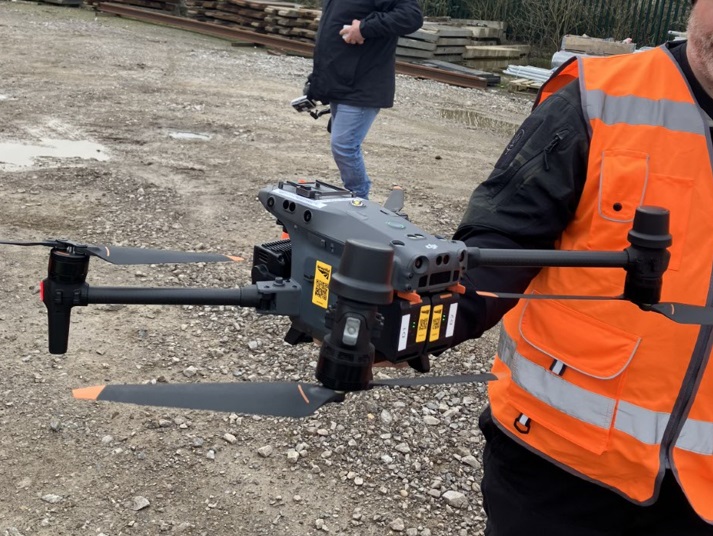
An East Midlands drone
© Network Rail
Over a recent 90-day period, Network Rail pilots carried out more than 500 minutes of flight time during both planned inspections and emergency situations. The aerial views they captured helped operational teams:
- Assess incidents more quickly
- Reduce train delays
- Minimise risk to workers on the ground
Since September 2025, Network Rail’s drone deployments have saved around 100,000 GBP, largely through improved productivity and by reducing the need to block lines during inspections.
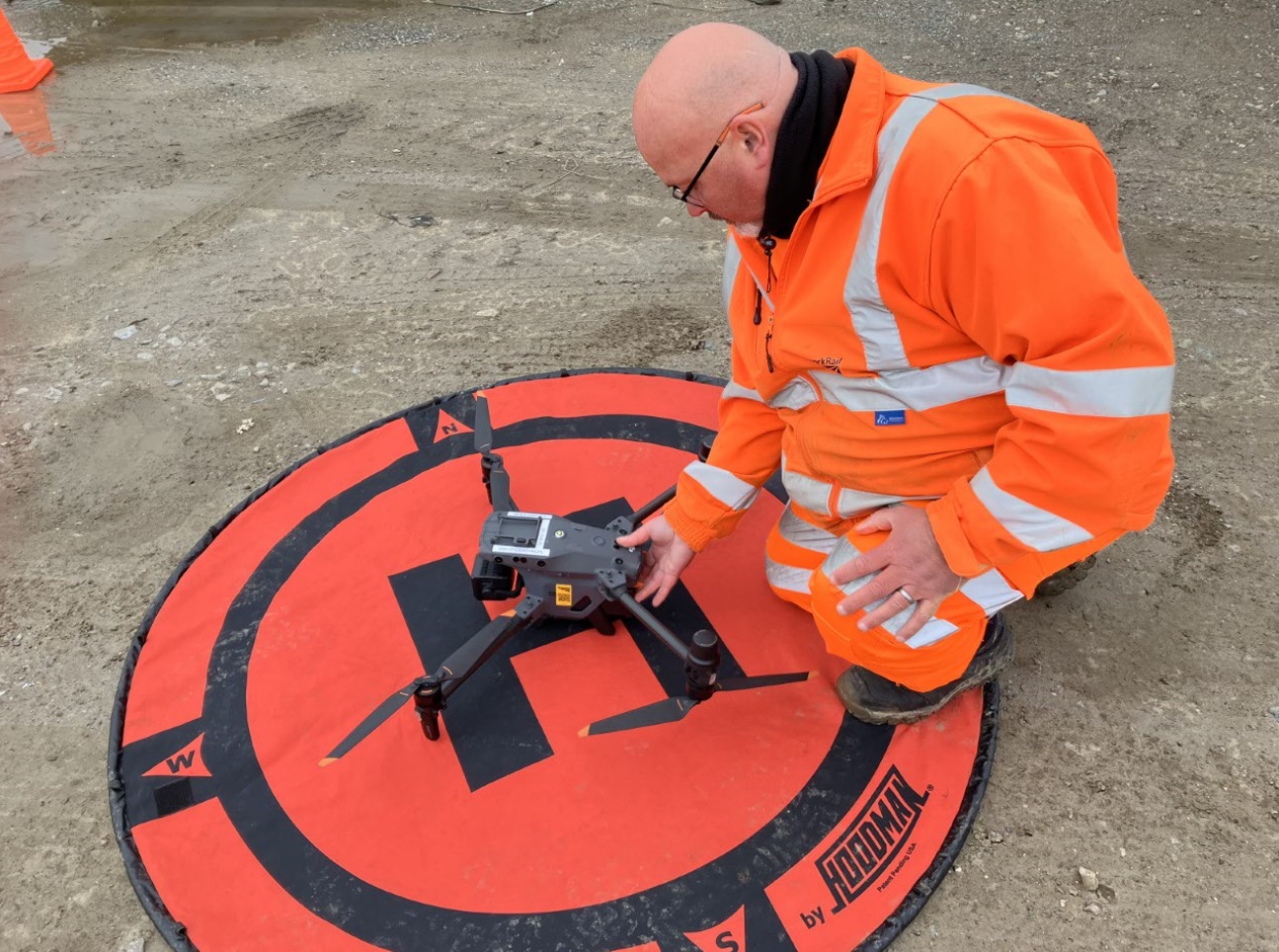
MOM Bob Hodgson with a drone
© Network Rail
Britain’s railway is a vast and complex system. Engineers must monitor thousands of miles of track, bridges, overhead power lines and embankments. Traditionally, inspecting these assets has required teams to access the track directly, often during scheduled engineering possessions or line blocks. Drones are changing that approach.
Equipped with high-resolution cameras and infrared sensors, drones can survey railway infrastructure from the air in minutes. This means potential issues can be assessed quickly without sending staff onto the track, improving both safety and efficiency. To leverage these benefits, drones are being used in several types of railway incidents across the East Midlands.
Lineside Fires
Vegetation fires can threaten overhead electrical equipment. By using drones fitted with infrared cameras, teams can quickly measure the temperature of overhead line components. This allows engineers to determine whether it is safe to restore power and reopen the line.
Trespass and Animal Incursions
Trespass incidents are a growing cause of disruption across the network. Drones allow staff to scan large areas of track quickly without stopping trains unnecessarily.
For example, drone flights in Nottingham recently confirmed that a section of line was clear, avoiding a full line block. In Mansfield, a drone was used to track the movement of a person on the railway until they could be safely intercepted after leaving the tracks.
According to Network Rail, trespass alone caused more than 1.5 million delay minutes across the railway last year. Faster incident detection and response is therefore a major priority.
Flooding Assessments
Extreme weather can rapidly affect railway infrastructure. Drones provide aerial insight into flooded areas, helping engineers understand the scale of the problem and plan repairs.
During flooding near Draycott in late February, drones were used to assess how water was affecting nearby routes. Network Rail estimates that drone inspections can halve assessment times and save around 2,000 GBP per incident.
Training for Emergencies
To ensure staff can use the technology effectively during live incidents, Network Rail is also investing in training.
A programme of emergency drone flight tests was recently carried out in Derby, simulating scenarios such as trespassers on the railway. The exercises allowed pilots to practise search and tracking operations and explore new drone features designed for rapid response situations.
The training is intended to build confidence among staff so they can deploy drones quickly and safely when real incidents occur.
Dan Matthews, operations director at Network Rail, said:
Emergency drone flight tests enhance our operational capability to respond to incidents, helping us to deliver a safe and reliable railway for our passengers and colleagues.
With delays from trespass becoming one of the most significant causes of disruption on the railway – over 1.5 million delay minutes across the network last year – drones offer a game-changing speed of response.
By surveying the railway safely, our colleagues can be directed to potential incidents quickly, rather than having to walk miles along the railway to find them. This means a safer working environment for our teams, while vastly speeding up the process.
The Future of Drones on the Railway
The East Midlands programme reflects a broader shift across the rail industry. As drone technology continues to improve with longer flight times, better sensors and more advanced data analysis, its role in railway operations is expected to expand further.
Potential future uses include:
- Large-scale infrastructure inspections
- Monitoring landslips and vegetation growth
- Supporting emergency services during major incidents
- Surveying construction projects and new railway lines
For infrastructure managers like Network Rail, drones are thus evolving into a core operational tool that improves safety, speeds up decision-making and helps keep trains running on time.