Indian Railways is approaching full electrification of its main network, a development set to reduce its exposure to volatile oil markets at a time of disruption to energy supplies from the Persian Gulf.
The milestone comes as shipping through the Strait of Hormuz has been disrupted following the outbreak of conflict in the Middle East, affecting global oil and gas flows. India relies on the route for around 40 percent of its crude oil imports and more than 20 percent of its liquefied natural gas supplies.
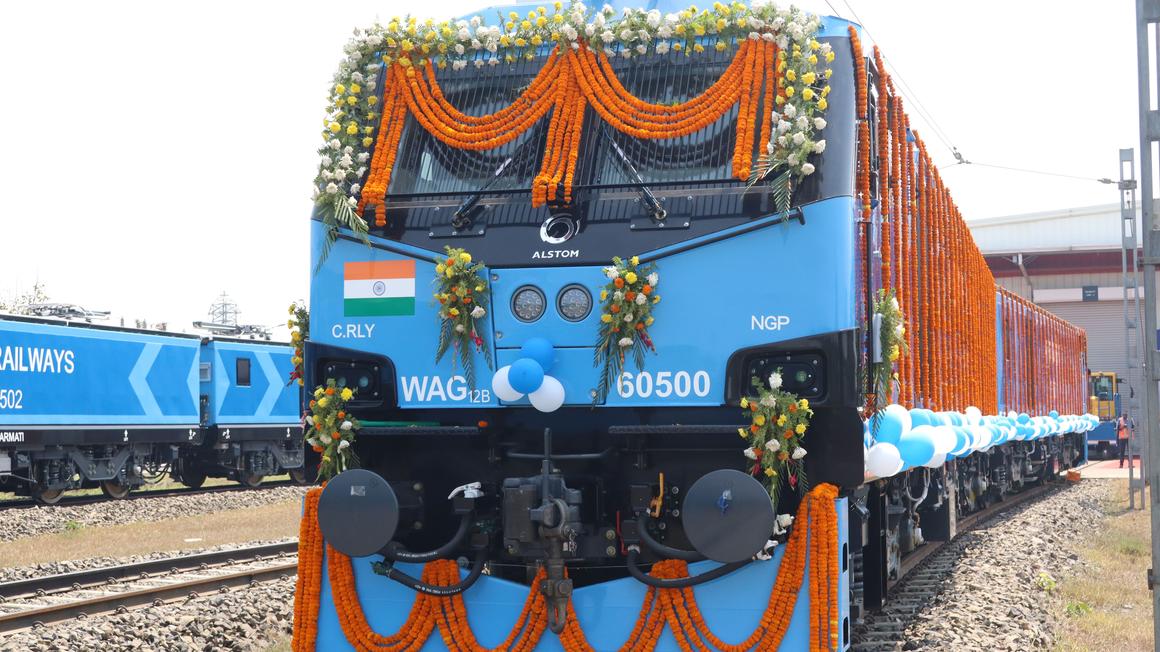
An electric locomotive operated by Indian Railways
© Alstom
According to data presented by Riding Sunbeams, a UK-based think tank and consultancy, the network operated by Indian Railways had electrified 99.4 percent of its broad gauge routes by January 2026. Of a total 70,001 route kilometres, 69,427 kilometres have been fitted with overhead electric lines, leaving a small number of sections across five states yet to be completed.
The electrification programme has significantly reduced diesel consumption in rail operations. In the 2024–25 financial year, diesel use fell by 17.8 billion litres compared with earlier levels, representing a 62 percent reduction since the 2016–17 baseline.
India imports more than 85 percent of the crude oil it uses to produce fuels such as diesel and petrol. Rising global oil prices have historically increased the country’s import bill and placed pressure on inflation and public finances. Shifting rail traction from diesel engines to electricity reduces some of that exposure.
Leo Murray, Chief Executive of Riding Sunbeams, said:
By electrifying its entire railway network and committing to net zero by 2030, India is lighting the way for the rest of the world, and demonstrating clearly how infrastructure strategy can strengthen both climate ambition and energy security. Few countries have moved at this pace or scale. Reducing reliance on imported fossil fuels while rapidly expanding home-grown renewable electricity is not only a climate imperative, it is a resilience strategy in an increasingly volatile world.
Railway electrification has accelerated during the past decade. Around two-thirds of Indian Railways’ network’s electrified track has been completed within the last ten years as part of the government’s “Mission 100% Electrification” programme.
Alongside electrification, the railway system has increased its use of renewable energy. Installed solar capacity across railway facilities has grown from 3.68 megawatts in 2014 to about 898 megawatts by November 2025. Solar panels have been installed at more than 2,600 stations and operational buildings, with about 70 percent of the capacity supporting train traction.
The rail operator has set a target of reaching net-zero carbon emissions by 2030. Meeting that goal is expected to require further expansion of renewable electricity generation and procurement, as well as improvements in energy efficiency. Total electricity demand from the system could exceed 10 gigawatts by the end of the decade.